In a nutshell
- ✨ Brightens whites without detergent using sodium percarbonate (oxygen bleach): low-odor, low-residue, and budget-friendly.
- 🔧 Usage: activate in warm water (about 40–50°C), dissolve before adding clothes, soak 30–60 minutes for yellowing, and use a spot-treatment slurry for cuffs and collars.
- 🔬 Science: releases hydrogen peroxide to oxidize stains while sodium carbonate boosts alkalinity, restoring reflectivity and neutralizing odors.
- ⚠️ Safety: never mix with chlorine bleach or ammonia; avoid wool and silk; test colorfastness, store airtight, and limit metal exposure during soaks.
- 💡 Pro tips: add a half-dose of detergent for heavy soil, give oxygen space to circulate, and tame hard water with a softener or a pinch of citric acid.
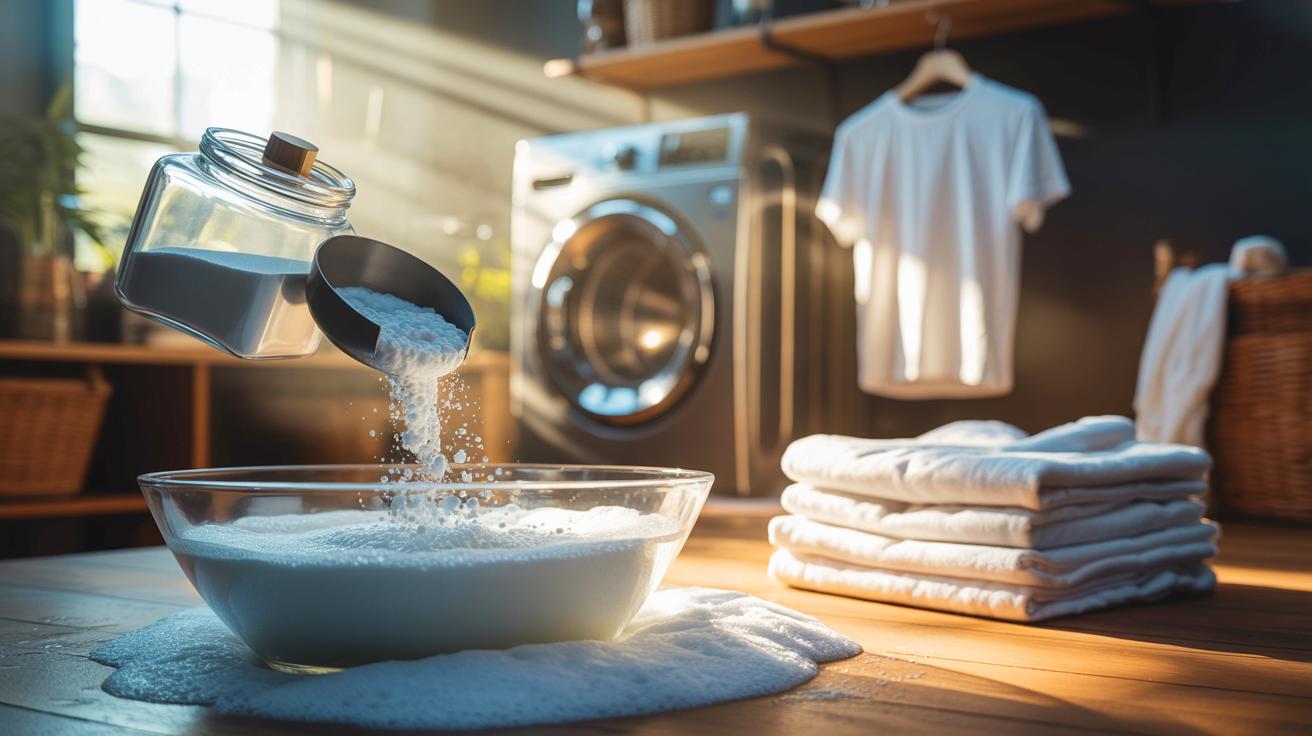
There’s a quiet revolution happening in the laundry room, and it doesn’t smell like perfume or fluorescers. Meet the mineral-based powder that turns dingy socks, graying tees, and yellowed pillowcases into crisp, camera-ready whites—without a capful of detergent. The star is sodium percarbonate, widely known as oxygen bleach, a simple compound that unlocks stain-fighting power the moment it hits warm water. It’s affordable. It’s low-odor. It rinses clean. And in many everyday loads, it makes detergent optional. For households sensitive to fragrances, and for anyone weary of detergent buildup that dulls fabrics, this powder delivers a bright, airy reset few products can match.
What Is Sodium Percarbonate, Really?
Think of sodium percarbonate as a tidy package of two familiar allies: hydrogen peroxide and sodium carbonate (washing soda). Add water, and the powder breaks apart, releasing a burst of active oxygen that targets stains while the alkaline soda lifts soils and neutralizes odors. No harsh chlorine. No stubborn residue. It decomposes into oxygen, water, and soda ash—clean and simple. That’s why many eco-minded cleaners love it: results without the perfume cloud or the environmental baggage.
In practical terms, it behaves like a precision brightener for whites. Sweat grays the armpits of shirts; body oils oxidize and yellow pillowcases; mineral-laden water leaves shadows in cuffs and collars. The oxygen released by percarbonate is excellent at breaking those bonds, turning colored compounds into removables that rinse away. Crucially, it works in the drum or in a soak, meaning flexibility for your routine. On lightly soiled loads, it often stands in for detergent entirely; on heavy-duty messes, it supercharges your usual routine.
It’s powerful but not harsh, especially compared with chlorine bleach, which can weaken fibers and strip finishes over time. Use it to rehabilitate thrift-store finds, refresh linens, or rescue a favorite white tee that’s lost its snap.
How to Use It for Dazzling Whites
Start with temperature. Warm water (104–122°F / 40–50°C) activates sodium percarbonate efficiently, while still being gentle on most fabrics. For a routine white load, dissolve the powder in the washer before adding clothes to prevent spotting. On stained areas—cuffs, collars, underarms—mix a spoonful with warm water to make a slurry and dab it on for 5–10 minutes before washing. No detergent required for lightly soiled whites; add a half-dose of your regular detergent only when grime is heavy.
Soaking is the secret weapon. Stubborn yellowing responds beautifully to a 30–60 minute soak in warm water with a measured scoop of powder. Rinse or spin, then launder as usual. Avoid overloading the machine; oxygen needs space to circulate. And don’t forget to check labels: skip wool, silk, leather, and items labeled “dry clean only.”
Keep metals in mind. While the solution is generally fabric-friendly, extended contact with bare metals (like uncoated snaps or buttons) isn’t ideal. Rinse promptly after soaking. For water rich in iron, consider a final rinse with a pinch of citric acid to curb mineral redeposition that dulls brightness.
| Task | Powder Amount | Water Temp | Time | Notes |
|---|---|---|---|---|
| Light white load | 1–2 tbsp | Warm | Normal cycle | No detergent needed |
| Heavily soiled whites | 2–3 tbsp | Warm/Hot | Normal cycle | Add half-dose detergent |
| Pre-soak for yellowing | 2 tbsp per gallon | Warm | 30–60 minutes | Rinse, then wash |
| Spot treatment | 1 tsp + water slurry | Warm | 5–10 minutes | Test seams first |
The Science Behind the Brightness
Stains stick through chemistry. Many discolorations in white fabrics are oxidizable—complex molecules formed by body oils, wine pigments, tea tannins, or the slow burn of time and heat in the dryer. When sodium percarbonate dissolves, it releases hydrogen peroxide, an oxidizer that snips apart those stain chromophores, essentially “bleaching” them clear. Simultaneously, sodium carbonate boosts alkalinity, helping water loosen soils and break the hold of greasy residues. This one-two punch returns light reflectivity, the defining trait of true whiteness.
Detergents rely on surfactants to surround and lift soils. Oxygen bleach works differently; it chemically alters the stain so it detaches more readily and doesn’t reattach in the rinse. That’s why many users report a “crisper” white rather than a slick, soft feel that can come from over-surfactanted loads. Importantly, oxygen bleach is slower-acting than chlorine. It prefers time and warmth. Give it both, and you’ll see the magic.
There’s another benefit: odor control. The same oxidation that clears stains also neutralizes smell-causing compounds in gym gear, napkins, and towels. No heavy fragrances required—just clean that actually smells like clean.
Safety, Fabrics, and When to Skip It
Even gentle products have rules. Never mix sodium percarbonate with chlorine bleach or ammonia. The combinations are unnecessary and can be hazardous. Always dissolve the powder before adding clothes to prevent localized lightening. If you’re new to oxygen bleach, start with the lowest dose; you can always scale up on the next cycle.
Fabric matters. Most cottons, linens, and durable synthetics respond beautifully. But skip wool and silk: protein fibers don’t appreciate oxidizers. Watch for trims and prints as well; while percarbonate is generally color-safe, test a hidden seam first. For antique linens or heirloom lace, a short, lukewarm soak with a tiny dose can be transformative—just monitor closely and rinse thoroughly.
Storage is simple: keep it dry, airtight, and away from humidity to preserve potency. If your washer struggles with hard water, pair oxygen bleach with a water softener or do an occasional citric-acid maintenance cycle to prevent mineral shadows. When in doubt, shorter soaks, warmer water, and patience beat excess powder every time.
Bright whites no longer demand chlorine fumes or vats of suds. With sodium percarbonate, you can strip away dinginess, reset fibers, and walk out the door in a T-shirt that looks new, not just “good enough.” It’s budget-friendly, low on residue, and satisfying to watch in action—especially when a simple warm soak revives laundry you were ready to retire. Clean shouldn’t be complicated, or perfumed to the heavens. What white-item rescue will you try first: the stack of guest towels, that beloved tee, or the stubbornly gray socks daring you to give them one more chance?
Did you like it?4.5/5 (28)
Just tried sodium percarbonate on a load of dingy gym socks and wow—came out crisp without any detergent. The warm water tip was clutch. Thanks for the precise dosages and the soaking advice!
Quick question: in an HE top‑loader, do you dissolve the powder in the drum first or use the detergent drawer? Any risk to elastics if I soak 45 mins?
My pillowcases went from Earl Grey to Arctic White in one soak. Going to tackle the guest towels tonite. Loved the pinch-of citric acid tip for hard water with percarb.
Thank you for calling out the wool and silk no-go. I nearly nuked a silk scarf last year with harsh stuff—this guide would’ve saved it.
Absolute laundry game‑changer—no perfume cloud, just clean. I’m adding warm percarbonate soaks to my Sunday reset. Thanks for the clear steps and safety notes 🙂
Any chance you can share a grams‑per‑liter guideline? Tablespoons vary a lot by scoop. I’d love a weight‑based meassure for light loads versus deep soaks.
Used this on vintage napkins from my gran—thirty minutes at 45°C and the reflectivity came back. No detergent film, no colr shift. I’m impressed.
Whites so bright the neighbors might file for sunglases. Kidding, but seriously, the underarm shadows vanished after a pre‑soak. Goodbye mystery gray, hello camera‑ready laundry.
About the metal caution: are jean rivets and nickel snaps okay for a 30‑minute soak, or should I keep those items to a quick dissolve‑and‑wash only?
Great explainer. I used a half‑dose of detergent plus percarbonate on muddy soccer kits and it nailed the odor. Would you reccomend pre‑dissolving in a pitcher for front loaders?
Love that this skips chlorine fumes and heavy perfumes. Our household is fragrance‑sensitive, so a clean rinse and neutral smell is exactly what we needed.
That spot‑slurry for cuffs and collars is gold. A soft toothbrsh plus warm temprature, five minutes, and the grime lifted without scrubbing my knuckles off.
The “give oxygen space” tip explains so much. I used to cram the drum and wonder why whites dulled. Now I leave breathing room and the laundy glows.