In a nutshell
- 🧼 Banish coffee stains fast with baking soda—an inexpensive, eco-friendly fix that restores cup shine in under a minute.
- 🔬 How it works: mild abrasive crystals and an alkaline pH loosen coffee tannins and lift residue without scratching.
- 📝 Step-by-step: 1 tsp baking soda + a few drops of water; gentle circular scrub for 15–60 seconds; warm rinse and lint-free dry.
- ☕ Material tips: porcelain/ceramic, glass, stainless steel clean easily; use thin slurry near gold rims or decals and test a hidden spot.
- 🧽 Maintenance: make a 30-second habit after your last sip, deep-clean lids weekly, add a vinegar rinse for hard water, and skip harsh abrasives.
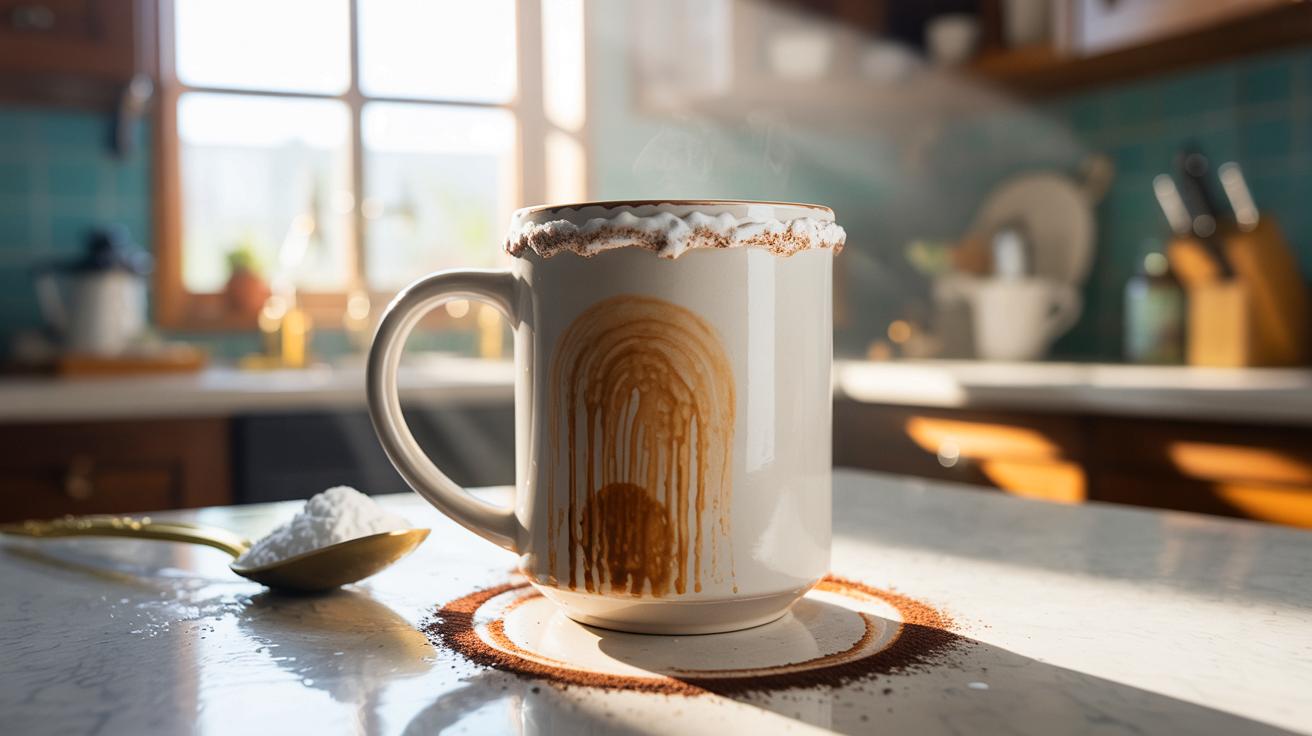
Every coffee lover knows the heartbreak: a favorite mug, dulled by stubborn brown crescents that never seem to budge. Good news travels fast in the kitchen, and this fix is faster. Reach for baking soda. The humble box in your pantry is a quiet powerhouse, cutting through residue and tannins that cling to porcelain and glass. No complicated soak. No harsh bleaches. Just a quick rub, a rinse, and a little awe. In under a minute, the stains lift and the glaze gleams again. It’s inexpensive, eco-friendly, and oddly satisfying—like erasing yesterday’s rings and starting the morning fresh.
Why Baking Soda Erases Stains So Fast
Stained cups look permanent, but they aren’t. Coffee’s color comes from tannins, compounds that hang onto microscopic pits in a cup’s surface. Baking soda tackles both problems at once. Its crystals act as a mild abrasive, buffing away residue without scratching glazed ceramic or tempered glass. At the same time, its alkaline pH helps loosen acidic discoloration, breaking the bond that coffee forms as it dries. That synergy explains the speed: when you add a few drops of water, you create a slick paste that glides, scrubs, and lifts in one motion. No specialized cleaner required.
The science is simple but effective. Smaller particles fit into crevices. Gentle alkalinity neutralizes acids. Together, they dislodge grime that dish soap alone leaves behind. Unlike chlorine bleach, baking soda won’t yellow porcelain over time, and it rinses cleanly. Minimal effort, maximal payoff. For daily drinkers and espresso devotees alike, it’s the shortest route from dingy to dazzling.
Step-by-Step Method for a Sparkling Cup
Start with a quick rinse to remove loose residue. Sprinkle 1 teaspoon of baking soda inside the cup. Add just enough water—five or six drops—to form a paste. Using a soft sponge or microfiber cloth, swirl in tight circles along the rim and bottom where rings set. Apply light pressure; let the grit do the work. Most stains fade in 15 to 30 seconds. For stubborn patches, pause for 60 seconds, then continue. Rinse with warm water until slickness disappears. Dry with a lint-free towel to restore shine. It’s a one-minute reset for thrice-a-day coffee habits.
If residue lingers, boost the paste with a single drop of dish soap or a few drops of 3% hydrogen peroxide. Target the handle and lip, where oils collect. Avoid steel wool, which can dull glazes. For travel mugs, treat the lid gasket separately; scrub gently and rinse thoroughly. Gentle pressure is key—the powder does the heavy lifting.
What Works on Different Materials
Not all cups are created equal. Glazed stoneware and porcelain respond beautifully to a baking soda paste. Glass clears quickly. Stainless steel interiors, including insulated tumblers, come clean without clouding. Decorations change the calculus: metallic trims and delicate decals demand care. When in doubt, test a hidden spot and shorten contact time. The aim is precision—not overkill. Below, a quick cheat sheet to dial in ratios and timing for the mug you have in hand.
| Material | Pantry Fix | Ratio/Amount | Contact Time | Notes |
|---|---|---|---|---|
| Ceramic/Porcelain | Baking soda paste | 1 tsp + drops of water | 30–60 seconds | Safe on glazes; avoid scrubbing metallic rims |
| Glass | Baking soda paste | 1 tsp + water | 20–40 seconds | Use soft cloth to prevent micro-scratches |
| Stainless Steel | Baking soda + drop of dish soap | 1 tsp + 1 drop | 45–90 seconds | Rinse thoroughly to avoid film |
| Decorated/Gold-Rim | Baking soda slurry (very thin) | 1/2 tsp + 1 tsp water | 15–20 seconds | Test first; keep off metallic paint |
Always test a discreet area before full cleaning. Skip anything highly abrasive and keep paste off exterior decals you care about. If your water is hard, a quick white vinegar rinse afterward removes mineral sheen—then rinse with water again. The goal is a neutral, gleaming surface that smells like nothing at all. That’s clean.
You don’t have to live with brown rings. Make baking soda your standing countertop fix: a spoon by the sink, a soft cloth nearby, a 30-second habit after the last sip. Rinse fast to prevent set-in stains, deep-clean lids weekly, and let cups air-dry completely to stop musty odors. For heavy coffee days, do a midweek polish; on weekends, reset everything. Simple routines beat deep scrubs every time. Your favorite mug deserves to look like it did on day one—bright, smooth, and ready for another pour. What other small kitchen rituals could dramatically improve your daily coffee ritual?
Did you like it?4.5/5 (22)
Tried this in my stained porcelain mug and it worked in under a minute—no bleach smell, just shine. Baking soda paste + gentle circles = magic. Thank you for the clear ratios and the reminder to dry with a lint-free towel!
Question: for travel mugs with silicone gaskets, do you scrub the gasket with the same paste or soak it seperately? And is the white vinegar rinse safe for the seals long-term?
My favorite mug looked like a tiny eclipse laboratory. One teaspoon of baking soda, a few drips of water, swirl-scrub, rinse, and—bam—clean! Minor spill on the counter, major win in the cup. My mornings feel brighter alreay.
Love the gold-rim caution. If I keep the slurry thin and avoid the metallic paint, is 15–20 seconds truly enough, or should I aim for a single gentle pass and immediate rinse to be extra safe?
Added one drop of dish soap to the soda paste—boom, stainless tumbler gleamed. Rinsed well and no film left behind. Quick, cheap, and oddly satisfying.
This hack just gave my mug a spa day. Tiny crystals doing tai chi on tannins—so zen! Followed with a vinegar rinse because hard water squad here, and the shine legit popped. My sink station feels upgraded 🙂
The 30-second habit tip is gold. I drink three cups a day, and this turns cleanup into a micro-ritual. Also appreciate the reminder to clean lid gaskets weekly—mine were, uh, gunky. Thanks for the gentle-pressure mantra.
Does the same paste ratio work for tea and chai stains, or should I let it sit closer to 60 seconds for turmeric-heavy mugs? Any risk of clouding on borosilicate glass if I over-scrub?
I pre-mixed a tiny jar of slightly thick paste and keep a microfibre cloth next to the kettle. One swirl after the last sip, rinse, done. Cups look new-ish every day. Simple routines really beat deep scrubs.
Curious about hydrogen peroxide: is the 3% add-on safe for daily use, or better as a weekly boost only? I’d like to target the lip and handle oils without over-doing it. Appreciate any guardrails.
This post reads like a pep talk for mugs, and I’m here for it. “Minimal effort, maximal payoff” is my new kitchen motto. Also, the phrase “the glaze gleams again” is definately staying in my head.
Hard water crew checking in: the quick vinegar rinse followed by water totally removed that weird mineral sheen. No smell left, just neutral clean. This is one pantry trick I’ll actually keep doing—bookmarked and shared!