In a nutshell
- 🧪 The science: citrus peels contain d-limonene and linalool, terpenes that disrupt insect behavior; effects are stronger when oils are freshly released and fade as they evaporate.
- 🛠️ DIY tactics: Make a Simmered Citrus Spray, use Dried Peel Sachets, or try a quick Rind Rub; reapply regularly and spot-test surfaces to avoid damage (especially marble).
- 🎯 Best use and limits: Works well for ants and flies, with short-term relief for mosquitoes; not effective for fruit flies or entrenched pests—pair with Integrated Pest Management basics like sealing and sanitation.
- 📊 Quick comparisons: Orange/lemon peels deter ants and flies; lime/grapefruit help in pantries; cucumber offers mild, anecdotal deterrence; banana peels attract fruit flies and shouldn’t be used as repellents.
- ♻️ Safety, sustainability, cost: “Natural” isn’t harmless—ventilate, keep away from pets and aquariums, and store mixes safely; peels are low-cost, low-waste tools that complement traps, screens, and baits.
Most people toss fruit peels into the trash or compost without a second thought. Yet those colorful scraps, rich with essential oils and bioactive compounds, are quietly becoming an eco-friendly tool for keeping bugs at bay. The standout? The citrus peel—orange, lemon, lime, even grapefruit. Packed with naturally occurring terpenes, these peels release scents that insects avoid and chemicals that can disrupt their behavior. Households hungry for cleaner air and fewer synthetic sprays are taking notice. It’s a practical, low-cost shift that turns kitchen waste into a useful line of defense. And it’s simple: save the peel, prepare it right, and let nature help protect your home.
The Science Inside Citrus Peels
Citrus peels are miniature chemical factories. Their rinds contain d-limonene, linalool, and related terpenes—volatile compounds plants evolved to deter herbivores and pathogens. To insects, these molecules present a double problem: they can mask the cues pests use to find food or mates, and at higher concentrations they act on the nervous system, overstimulating receptors and causing avoidance. That’s why a squeeze of orange peel smells refreshing to you but sends ants scouting elsewhere. The U.S. Environmental Protection Agency recognizes d-limonene as a botanical pesticide, and it’s long been used in certain pet shampoos and household cleaners.
Effectiveness hinges on freshness and concentration. The oils sit in tiny sacs visible as glossy dots on the rind; bruising, grating, or heating peels releases them. When those oils evaporate, the repellent effect fades—so timing and reapplication matter. Linalool’s floral note tends to discourage mosquitoes in short bursts; limonene can deter ants, flies, and some roaches on contact. You’re not fumigating the house—this is targeted, localized control. Think entry points, windowsills, porch dining, under-sink corners. Used consistently, peels offer a gentle push that shifts insect traffic away from your space.
How to Turn Peels Into Practical Repellents
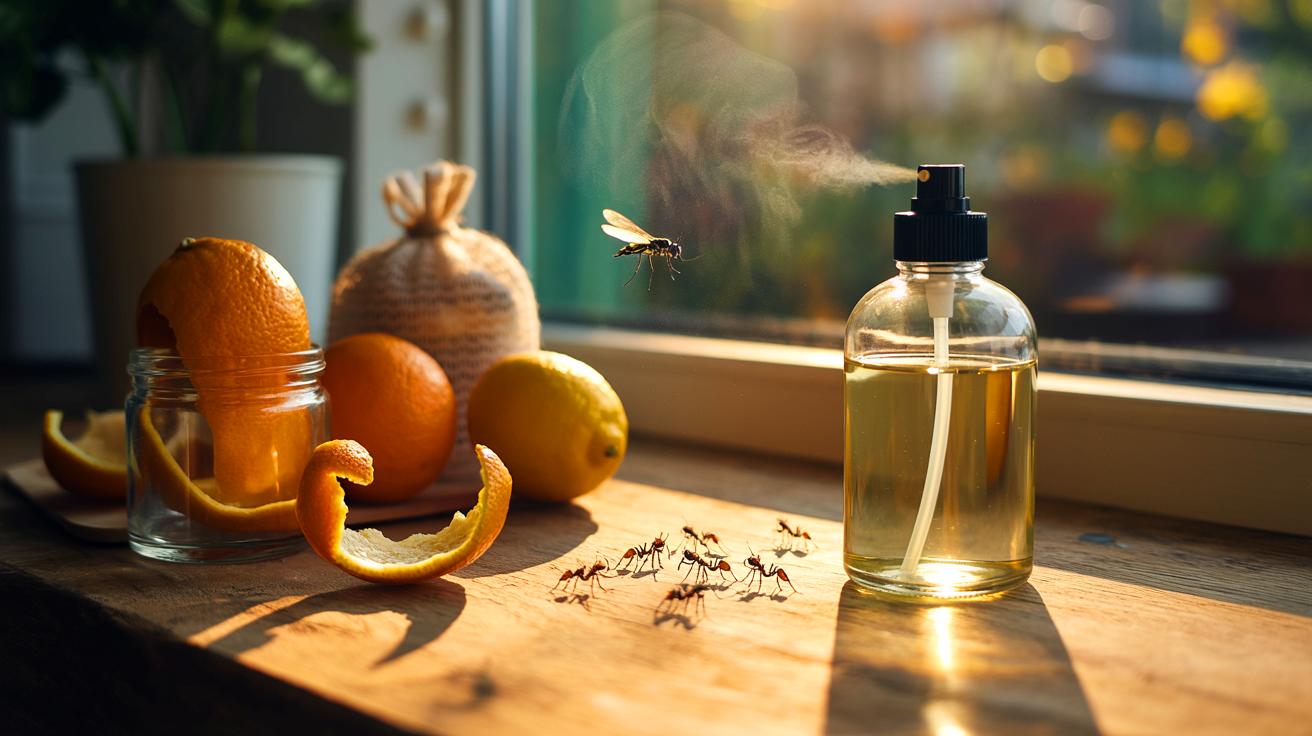
Simmered Citrus Spray: Fill a small pot with a few cups of water and two handfuls of fresh orange or lemon peels. Simmer 15–20 minutes, cool, and strain into a spray bottle. Add a teaspoon of white vinegar and a drop of mild dish soap as a surfactant. Mist around ant trails, door jambs, porch railings, and trash cans. Avoid directly spraying delicate plants or natural stone. Test any surface first—citrus and vinegar can etch marble and some finishes. Reapply every day or two; the scent works while it’s present.
Dried Peel Sachets: Bake citrus peels on a low oven setting (200°F/93°C) until crisp, then tuck them into breathable pouches. Place in pantry corners, under sinks, or in shoe closets. The slow-release aroma can discourage crawling pests and pantry ants. Refresh by lightly crushing sachets to release residual oils. For a power-up, add a few dried cloves or bay leaves—traditional cupboard deterrents that complement terpenes without overwhelming the room.
Rind Rub and Wipe: For outdoor dining, rub fresh lemon or orange rinds on table edges and chair legs. Wipe down windowsills with a cloth dipped in concentrated peel infusion. It’s quick, local, and perfect before guests arrive. Think of these methods as scent fencing: subtle barriers that steer insects elsewhere without drenching your home in synthetics. Keep peels refrigerated for a day or two to stretch supply, or freeze them for batch prep later in the week.
Where Peels Work Best—and Where They Don’t
Citrus excels as a first-line deterrent for nuisance pests that follow chemical trails or hover around food. Ants often break formation when a fresh limonene barrier interrupts their pheromone paths. Houseflies dislike the sharp citrus volatiles. Mosquitoes? The effect is brief but noticeable when the scent is strong, which makes peels useful for short outdoor gatherings. Use peels where insects search and settle—thresholds, countertops, garbage stations, patio tables—not buried in corners you never touch. For heavy infestations or structural issues, you’ll still need trapping, sealing, and sanitation—the fundamentals of integrated pest management.
There are limits. Fruit flies adore fermentation; banana peels can invite them, not repel. Bed bugs and German cockroaches entrenched in walls will ignore a polite citrus cloud. Even for ants, rain or cleaning can erase progress. Success depends on rhythm: reapply scent barriers, pair with caulk to close gaps, and remove attractants like standing water and crumbs. The strategy is best described as nudge, not knockout. Below is a quick guide to set expectations and placement ideas.
| Peel | Key Compounds | Best Targets | Placement | Cautions |
|---|---|---|---|---|
| Orange/Lemon | d-Limonene, Linalool | Ants, flies, occasional mosquitoes | Windowsills, door frames, trash zones | Can irritate pets; avoid marble |
| Lime/Grapefruit | Limonene-rich terpenes | Ants, pantry scouts | Pantry corners, baseboards | Short-lived aroma; reapply |
| Cucumber (not citrus) | Cucurbitacins | Mild ant deterrence (anecdotal) | Entry cracks on patios | Compost quickly; attracts slugs |
| Banana | Fermentable sugars | Not a repellent | Use only in sealed compost | Attracts fruit flies |
Safety, Sustainability, and Cost
The appeal is obvious: free input, less chemical load, small climate footprint. Every peel repurposed is one more unit of value squeezed from food purchases and one fewer aerosol on the shelf. Used smartly, citrus rind becomes both cleaner and repellent—one tool doing two jobs. But “natural” doesn’t mean consequence-free. Terpenes can irritate skin and eyes; ventilate when simmering, keep sprays away from aquariums, and avoid misting near birds and cats, which are sensitive to essential oils. Store solutions out of reach of children. If you have asthma, start with small, localized applications and see how you respond.
Cost-wise, the math is friendly. A few peels and tap water can handle a kitchen zone for days, especially when combined with tidy habits—sealed containers, wiped counters, dry sinks at night. Compost the spent peels after use to keep the loop circular. For stubborn problems, blend strategies: bait stations for ants, screens for flies, fans and long sleeves for mosquitoes. Think sustainability as a spectrum: citrus peels as daily maintenance, targeted tools for the big jobs. That balance keeps your home comfortable, your conscience clear, and your budget intact.
Peels won’t replace every product in your cabinet, but they can meaningfully cut your reliance on harsh sprays while delivering surprising day-to-day wins. The scent is bright; the method is simple; the waste stream shrinks. Small habits, repeated, create real protection without the chemical fog. If a bowl of humble rinds can change how your kitchen feels on a summer evening, what other overlooked scraps might be ready to work for you next?
Did you like it?4.3/5 (28)
Fantastic explainer. I finally understand why d-limonene and linalool work without fogging the whole house. Love the focus on entry points and timing. This is practical, low-waste, and wallet-friendly advice—saving peels just became part of my weekly kitchen routine.
Quick question: if I’m simmering peels on the stove, do I need extra ventilation with a small aquarium in the next room? I saw the pet warning—just want to do this safely for my tetras.
Our ants formed a tiny highway to the dog bowl. After a lemon-peel perimeter, the union apparently went on strike. Citrus border patrol for the win! Any tips to keep the scent from fading so fast during hot afternoons?
Tried the rind rub before a patio dinner and it actually cut down the mozzies and flies. Bonus: everything smelled like lemonade. Going to keep a zip-bag of peels in the fridge for quick touch-ups.
Is the spray receipe okay for granite but not marbel? I’ll spot-test, but curious. Also, how strong should the vinegar be—white 5% or cleaning vinegar? Don’t wanna accidentally etch my counters while chasing ants.
For reapplication cadence, would twice daily be overkill, or ideal in humid weather? Also, do you notice a real difference between lemon vs grapefruit oils on ants, or is it mostly about freshness and concentration of the limonene burst?
Thank you for the integrated pest management reminder. Sealing crumbs and gaps plus the citrus nudge is exactly the balance I needed. Feels responsible, affordable, and doable in a small apartment kitchen.
My climate is super humid. Do dried peel sachets ever go funky or moldy? Should I bake them a bit longer, or toss in some rice to absorb moisture? Would fabric tea bags be best, or mesh pouches?
My kids loved “cracking” the peel oil sacs and making a tiny spray bottle. Fun science + chore combo! We’ll lable it clearly and store high—no little hands spritzing the cat, promise.
Appreciate the banana peel warning. Last time I left one out, the fruit flies turned my counter into a tiny nightclub. Lesson learned—citrus on the stage, banana in a sealed compost bin.
Added a few cloves to the dried peel sachets and my pantry smells like holiday cookies while the ants stay away 🙂 Simple and cozy win.
Any guidance on cat-safe intervals? If I wipe door frames with a concentrated peel infusion, how long should I keep the door shut before letting our curious floof rub on it? My kitty is sensetive to oils.
Bookmarked! Clear, actionable steps—and thanks for the heads‑up about birds and aquariums. I’ll keep simmering sessions short and windows cracked.
Storage question: how long does a batch of simmered citrus spray last in the fridge before it loses punch? Could I freeze ice-cube portions for weeknight quick reaaply sessions?