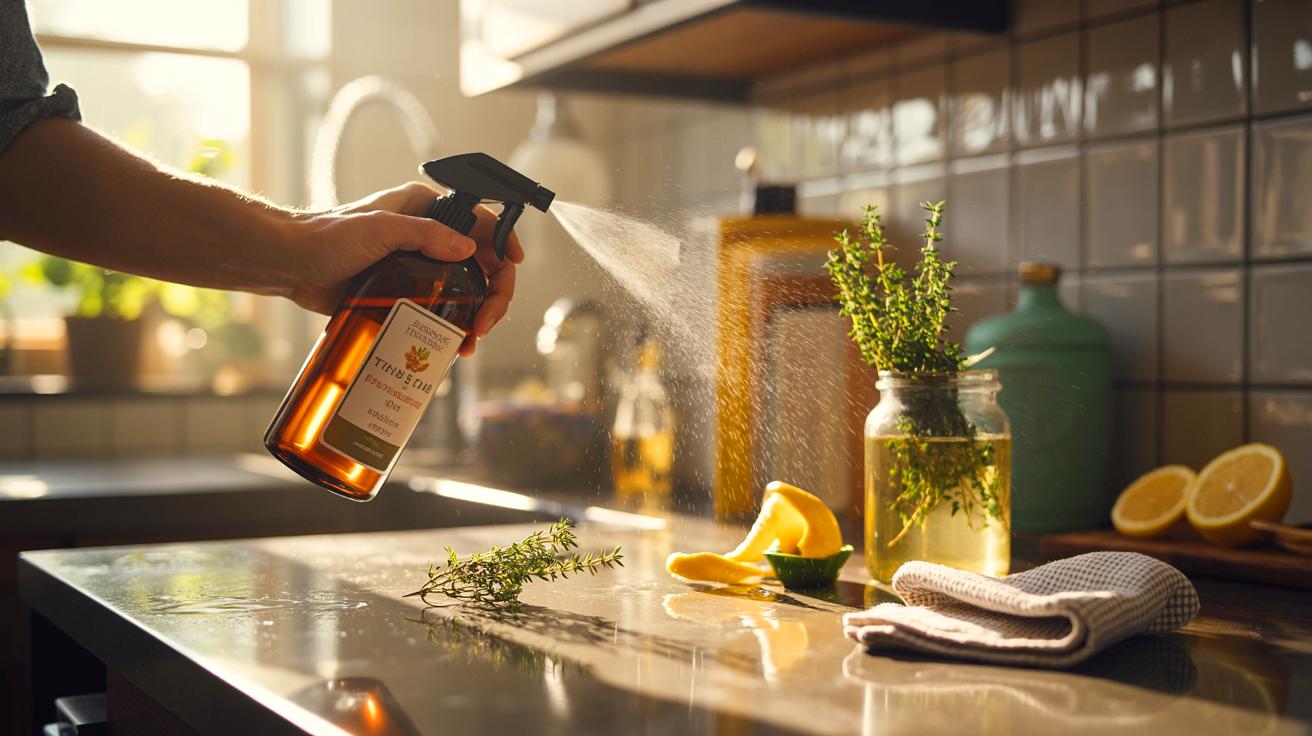
In a nutshell
- 🧪 A 3-ingredient formula using white vinegar (5% acetic acid) and thyme essential oil (thymol)—no soap—can kill up to 99% of common household bacteria on hard, nonporous surfaces.
- ⏱️ Efficacy hinges on contact time: keep surfaces visibly wet for 5–10 minutes after pre-cleaning to remove soil and shielded grime.
- 🍋 Simple recipe: use 1 cup undiluted vinegar for disinfection, add 15–30 drops thyme oil; optionally dilute 1:1 with water for daily cleaning and infuse with citrus peels for scent; shake and label.
- 🛡️ Safe-use rules: apply on hard, nonporous surfaces; avoid natural stone, cast iron, and aluminum; keep from kids/pets; don’t mix with bleach or peroxide; rinse food-contact areas.
- 📚 Backed by research on acetic acid and thymol reducing E. coli, Salmonella, and Listeria; know the limits—not hospital-grade and less effective on spores/certain viruses.
Americans are rethinking what “clean” smells like. Instead of harsh fumes and blue-tinted suds, a growing number of households are reaching for kitchen staples that quietly outcompete store-bought sprays. This isn’t a crunchy fantasy. It’s chemistry rooted in plants and pantry acids. The star of the story is a simple blend that, when used correctly, can kill up to 99% of common household bacteria on hard, nonporous surfaces—no soap, no synthetic additives, no mystery residue. It costs pennies per ounce. It’s easy to make. And it leaves your kitchen smelling like citrus and herbs, not a lab. Here’s how it works, why it’s effective, and when to use it.
Why a Natural Disinfectant Works
Disinfection isn’t magic; it’s mechanics and molecules. Household white vinegar (5% acetic acid) drops surface pH, creating an environment many bacteria cannot stand. Acids disrupt cell membranes and interfere with essential enzymes. Add a botanical powerhouse such as thymol—the active component in thyme— and you have a one-two punch that targets the lipid layers of bacteria, destabilizing their structure until they fail. Lemon and orange peels contribute citral and limonene, aromatic terpenes that support degreasing and leave a bright scent.
There’s a catch. Contact time. To hit the “kills 99%” mark, the surface must stay visibly wet for several minutes. Think of it like marinating a cutting board, not spritz-and-go. Temperature and soil load matter too: heavy grime can shield microbes. So clean first, then disinfect. Use the solution on hard, nonporous surfaces—stainless steel, sealed tile, glazed ceramic, appliance fronts. Skip delicate stones like marble or limestone; acids etch them. The outcome: a lean, plant-forward formula that works because it’s simple, not despite it.
The Three-Ingredient Recipe
This cleaner relies on pantry acids and a plant-derived antimicrobial. No soap. No bleach. No quats. Just three parts working in concert for reliable results and a clean finish that doesn’t sting your eyes.
You’ll need: 1) White distilled vinegar (5% acetic acid). 2) Distilled water (optional for everyday wiping). 3) Thyme essential oil (source of thymol), or a strong thyme infusion.
| Ingredient | Amount | Role | Notes |
|---|---|---|---|
| White vinegar (5%) | 1 cup (240 ml) | Primary antimicrobial; pH shock | Use undiluted for disinfection; infused with citrus peels for scent |
| Distilled water | Up to 1 cup (optional) | Everyday cleaning dilution | Skip dilution when aiming for max bacterial kill |
| Thyme essential oil | 15–30 drops (0.75–1 ml) | Thymol adds antimicrobial action | Shake before each use; plant-derived, potent |
Directions: Add vinegar to a clean spray bottle. For non-disinfection cleaning, add water 1:1; for disinfection, leave vinegar undiluted. Add thyme oil. Optional: pack a jar with citrus peels, cover with vinegar for 7–10 days, strain, then mix as above. Label the bottle, store it cool and dark, and shake before every spray to disperse the oil. For food-contact surfaces, rinse with water after the contact time. Do not mix with bleach or peroxide. And never apply to natural stone.
How to Use It Safely and Effectively
The method is as important as the mix. Start by removing crumbs, grease, and visible dirt with a dry wipe or a quick pass of a damp cloth. Pre-cleaning knocks down the “shield” that protects microbes. Now spray generously. The surface should glisten. Keep it wet for 5–10 minutes to reach that coveted ~99% bacterial reduction. Reapply as needed during the wait. Wipe with a clean microfiber cloth using light, even strokes in one direction to avoid cross-contamination. For cutting boards or fridge shelves, finish with a brief water rinse and let air-dry.
Smart safety matters. Keep out of reach of kids and pets. Avoid eyes and open flames (essential oils are flammable). Patch-test finishes, especially on painted cabinets. Skip stone counters, cast iron, and aluminum where acids can corrode or etch. Use fresh cloths; a dirty rag can re-seed bacteria. Label the date. Aim to use the batch within 30 days for best aroma and potency. And remember: this is for hard, nonporous surfaces—not fabrics, not unsealed wood, not electronics.
What Science Says and Where It Works
Peer-reviewed studies show that 5% acetic acid reduces populations of E. coli, Salmonella, and Listeria on surfaces when given adequate contact time. Botanical antimicrobials like thymol have a long history in food preservation and appear in EPA-registered products that achieve high log reductions under testing protocols. Real kitchens are not sterile labs, but the principles hold: acidity plus membrane-disrupting botanicals produce reliable microbial knockdown without bleach or ammonia. The result is practical and repeatable at home.
Know the limits. Spores and certain viruses can be tougher; this recipe is designed as a household surface disinfectant, not a hospital-grade sterilant. It shines on sinks, faucets, appliance handles, sealed tile, trash cans, and bathroom fixtures. It’s an excellent follow-up after a soapy wash when you want a no-residue finish. If you need hospital-level disinfection for specific risks, use products labeled for that purpose and follow their instructions. For everyday kitchens and bathrooms, though, this natural blend is a strong, low-fuss performer you can mix in minutes.
This cleaner proves a small thesis: simplicity works. A bottle of vinegar, a handful of thyme’s essence, and time-on-surface can outmaneuver complicated, perfumed concoctions that promise the world and leave you with headaches. It’s affordable, refillable, and surprisingly elegant in daily use. Your counters don’t need a chem lab to be safe, just a smarter routine and attention to contact time. Ready to trade the harsh fumes for bright, plant-powered clean and see how far this three-ingredient formula can take your home—starting today, where will you try it first?
Did you like it?4.4/5 (21)
This is exactly the step-by-step I needed! The reminder about pre-cleaning then keeping the surface wet for 5–10 minuts is gold. I’ve labelled a spray bottle and set a timer so I don’t rush it. Love the citrus peel infusion tip too—my kitchen’s gonna smell amazing.
Quick question: is it okay on quartz counters and sealed butcher block? I know to avoid marble/limestone and cast iron, but I’m unsure about those two. Also, if I disinfect a cutting board with vinegar + thyme, do I always need a rinse after the contact time?
The “marinate your cutting board” line cracked me up. My sink already smells like a salad bar, so this fits the vibe. I’ll just try not to toss croutons on the counter while it soaks. Five minutes, re-spray if it dries—got it. Cheap, cheerful, and less fumey.
Any suggestions if someone in the house is sensitive to essential oils? Could a strong thyme tea work as a sub, or just stick with plain 5% vinegar for most jobs? We’ve got a baby and a cat, so I’m extra careful about residues and strong scents. Thx!
Thanks for the clear instructions and the safety notes—especially the “don’t mix with bleach or peroxide” part. Labeling and dating the bottle is a smart habit I always forget. Printing this now 🙂
Tried a batch tonight: undiluted vinegar + 20 drops thyme oil, shook like crazy, did the trash can and fridge shelves. Left it wet ~8 minutes, quick rinse on food-contact spots per your advice. No sticky residue, just a clean, herby whiff. Definately keeping this.
Do you ever add a tiny emulsifier, or is shaking before each use enough? My oil keeps floating back up in a minute or two. Also, how long does the infused vinegar keep its punch—30 days max like you said, or longer if stored dark and cool?
Appreciate the heads-up about natural stone and aluminum; saved my poor pans. For stainless appliances, any trick to avoid streaks after the 5–10 minute dwell? I’ve got those smudgy kid handprints and want that gleamy finish without the blue bottled stuff.
Love the science bits—acetic acid pH drop plus thymol on membranes. Feels nerdy but practical. I made a little batch in a amber sprayer and wrote “DO NOT USE ON STONE” in big letters. Goodbye perfumey quats, hello pantry power. This is going in my weekly routne.