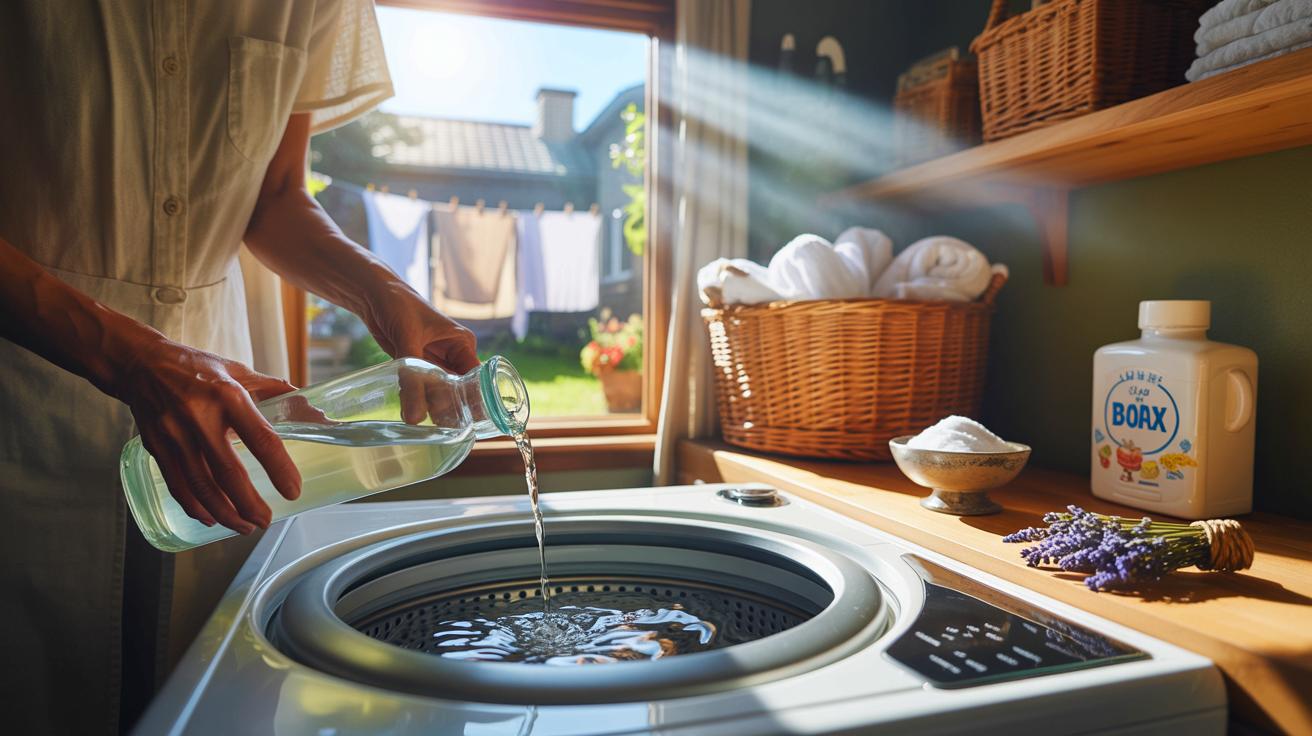
In a nutshell
- 🧴 White vinegar is the secret: its acetic acid dissolves detergent residue, minerals, and oils that trap odor, leaving a clean, neutral scent that lasts.
- ⚙️ Use it right: add 1/2 cup to the rinse cycle (1/4–1/2 cup for HE), increase for towels and gym wear, or pre-soak (1 cup per gallon) for deep odors; avoid raw silk and check wool labels.
- ⚠️ Safety first: Never mix vinegar and bleach; test colorfastness; clean a musty washer with a hot empty cycle and vinegar, then dry the door seal.
- 🧺 Old-school allies: baking soda in the wash, borax for hard water, UV sun-drying, and lavender sachets in storage—keep fragrance in storage, not the washer.
- 🌬️ Weeklong freshness: vinegar’s scent evaporates as fabrics dry; ensure thorough drying, tidy storage, and consistent doses for soft, long-lasting freshness.
Ask any American grandmother about laundry that stays crisp and clean-smelling until next Sunday, and she’ll likely reveal a simple secret that hides in almost every pantry: white vinegar. It isn’t glamorous. It isn’t perfumed. But it works. The quiet chemistry of acetic acid clears away the grime you can’t see—soaps, minerals, and oily residues that trap stink—leaving fabrics soft and neutral, not masked. Use plain white distilled vinegar, not apple cider or “cleaning” vinegar. In an era of scented boosters and pricey pods, the old method endures because it targets the cause, not the symptom. Results are subtle on day one. They’re unmistakable by day seven.
Why White Vinegar Was the Quiet Hero
Grandmothers didn’t pour white vinegar into the rinse for novelty; they did it because it solves three overlooked problems. First, the acetic acid neutralizes alkaline detergent residue and dissolves hard-water minerals that stiffen fibers and lock in odor molecules. Second, vinegar’s mild acidity helps break the bonds between fabric and leftover body oils—those clingy films that turn towels musty by midweek. Third, it acts as a light deodorizer that leaves a clean slate for the nose, rather than layering on perfume. The scent? It fades as the load dries. What remains is that low, quiet freshness grandmothers prized because it lasted.
There’s a bonus: vinegar is a surprisingly good stand-in for a fabric softener. By stripping the gunk, fibers move freely and feel softer, even on air-dried loads. Colors often look crisper because residues aren’t clouding the weave. Add it during the rinse, not the wash; that timing preserves your detergent’s cleaning power and lets the vinegar do its best work when the drum is clear of suds.
How to Use It Step by Step
Start with the basics. For a standard washer, add 1/2 cup of white distilled vinegar to the rinse cycle or the fabric softener compartment. For towels, gym wear, and pet blankets, bump it up to 3/4–1 cup—especially if your water runs hard. For HE machines, use 1/4–1/2 cup, because the cycles are tighter and more efficient. When odor has settled deep in fibers, try a pre-soak: one gallon of cool water with one cup vinegar for 30–60 minutes, then launder as usual. The goal is consistency. Small, regular doses beat occasional big splashes.
Keep two rules front and center. Never mix vinegar and bleach—ever; combining acids and chlorine can release dangerous gas. And always test colorfastness on delicate dyes or specialty finishes. Vinegar is safe on most everyday fabrics—cotton, blends, performance materials—but skip raw silks and consult care labels for wool. If your washer smells musty, run an empty hot cycle with one cup vinegar to cut biofilm and soap scum. Then dry the door seal. Routine matters. That’s how freshness lasts past Wednesday.
Old-School Add-Ons That Still Work
Vinegar was the anchor, but grandmothers used a small cast of allies to handle stubborn stink without synthetic clouds. Baking soda in the wash neutralizes acidic odors and softens water, a smart partner to vinegar in the rinse. Borax boosts detergent in mineral-heavy water and curbs odor-causing bacteria. Sun does wonders: line-drying brings natural UV to the party for a cleaner smell and a brighter white. In the linen closet, lavender sachets kept stacks of sheets whispering fresh notes for days. Keep fragrances in storage, not in the washer; that’s how the clean scent survives the week.
| Ingredient | Purpose | Typical Amount | Key Caution |
|---|---|---|---|
| White Vinegar | Rinse aid; removes residue; deodorizes | 1/4–1 cup per load | Never mix with bleach |
| Baking Soda | Odor neutralizer; softens wash water | 1/2 cup in wash | Don’t overuse in HE machines |
| Borax | Detergent booster; helps in hard water | 1/4 cup in wash | Keep away from kids and pets |
| Lavender Sachet | Drawer freshness; subtle scent | One per shelf | Replace every few months |
| Sun-Drying | UV freshening; whitening | 1–3 hours outside | Protect brights from fading |
Worried about that “vinegar smell”? It evaporates as the load dries. If a whisper lingers on heavy towels, use a warmer dry or longer line time, and ensure the washer drum is clean. For a gentle scent that doesn’t bulldoze freshness, stash linens with a sachet or a few cedar chips. That balance—clean first, aroma second—is the real heritage trick. Perfume shouldn’t do the heavy lifting; chemistry should. That’s how a Monday wash still smells honest on Saturday morning.
In the end, the secret wasn’t magic. It was a measured splash of white vinegar, timed to the rinse cycle, backed by simple allies and solid habits. It’s cheap, effective, and kinder to fabrics than many softeners. It also respects your nose, leaving laundry that smells like nothing—and therefore like everything good. Want weeklong freshness? Strip the residue, then keep storage clean and dry, with light scent only where it counts. Which old-school trick from your family are you ready to revive in your own laundry room?
Did you like it?4.6/5 (27)
Okay, this explains my gran’s magic basket. I tried 1/2 cup white vinegar in the rinze on a mixed load and the towels dried soft, not perfumey. The smell really vanished as they dried. Thank you for spelling out the amounts and the no-bleach warning—lifesaver.
Question for HE users: do you put 1/4 cup in the softener drawer or directly in the drum? My washer locks the drawer early, so timing the rinze is tricky. Also, can I alternate vinegar weeks with baking soda in-wash, or is consistency the key?
My grandma could weaponize vinegar and a clothesline. Loved the UV tip—had no clue it actually helps deodorize, not just dry. Any tricks for keeping kitty-blankets from that wet-dog vibe without overdoing it? I’ll bump it to 3/4 cup like you said for pet stuff.
Serious game plan time: I’m switching our laundy routine to your stack—detergent normal, vinegar in the rinse, borax only when water’s hard, then lavender sachets in storage. I’ll clean the musty washer first and dry the seal, promise. Hoping for midweek shirts that don’t lie about being clean.
Sun-drying plus a lavender sachet in the closet feels delightfully old-school. I forgot about cedar chips—great moth help too. Protecting brights from fading is my only worry; morning light and shade, right? Shorter line time seems to keep colors poppy without sacrificing that UV-fresh snap.
Just tried this on my gym gear: pre-soak 30 minutes (1 cup per gallon), then 1/2 cup in the rinse. By Saturday the shorts still smelled like nothing—aka success. Also noticing towels aren’t crunchy anymore. Vinegar as stealth softener is such a win for sensitive skin.
Appreciate the bold reminder: never, ever mix vinegar and bleach. For a swampy front-loader, do you recommend the hot empty cycle with 1 cup vinegar before or after running a detergent clean cycle? I’ll wipe and dry the door seal—mine collects gross biofilm and lint.
Thanks for the clear dosages! In hard water, would you choose borax in the wash plus vinegar in rinze, or baking soda is enough? Also, any tips for testing colorfasteness on thrifted tees with mystery dyes? I definitley don’t want pink suds running down the tub again.
My kids said the house smelled like a salad bar, but once the load dried it was gone and the socks didn’t stink by Thursday 🙂 I might stash sheets with lavender like you suggested—perfume in storage, not the washer—so the freshness doesn’t get bulldozed.
Quick fabric check: you say skip raw silk and verify wool labels—what’s your alternative for silk scarves that hold on to perfume-ey stink? A cool-water soak with a pinch of baking soda only, then air dry? For bright athletic wear, is 1/4 cup enough to avoid color lift?