In a nutshell
- ✨ Baking soda (sodium bicarbonate) can whiten teeth in days by gently polishing away extrinsic stains; it’s natural, affordable, and effective when used correctly.
- 🧪 Its low-abrasive RDA profile and alkaline pH help lift stains and neutralize acids, but it does not replace fluoride for enamel remineralization.
- 🗓️ Follow a safe five-day routine: Nights 1–3 light baking-soda polish, Day 4 rest, Day 5 repeat; use a soft-bristled brush, minimal pressure, and never mix with acids.
- ⚖️ For best results, pair, don’t replace: use baking soda for quick stain removal and keep regular toothpaste for daily cavity protection and long-term care.
- ⚠️ Key risks: over-scrubbing, acid combos, or use on restorations; consult a dentist if you have sensitivity or dental work, and consider professional whitening for internal discoloration.
American bathrooms are stuffed with whitening pastes, blue-light gadgets, and strips that promise a photo-ready smile. Yet there’s a humble pantry staple that many dentists quietly acknowledge for fast, visible results: baking soda. When used correctly, this natural powder can lift surface stains in just a few days, smoothing and brightening enamel without harsh bleaching agents. It’s cheap. It’s widely available. And it’s backed by decades of real-world use. Here’s the key: success comes from technique, timing, and restraint. Below, we explore why sodium bicarbonate stands out, how to try a short, safe at-home routine, and where this method edges past regular toothpaste—and where it doesn’t.
What Makes Baking Soda a Standout Whitener
On the whitening spectrum, baking soda excels at removing extrinsic stains—the coffee, tea, and red wine pigments that cling to the outer enamel. Its particles are soft and water-soluble, which means they gently polish without gouging. Dentists quantify abrasive potential using the RDA scale; plain baking soda’s value is very low, far below many “whitening” toothpastes. That mild, controlled abrasion matters. It buffs away stain while preserving the enamel’s glossy surface that reflects light and looks naturally white.
There’s a chemistry advantage, too. Sodium bicarbonate is alkaline. By raising oral pH, it helps neutralize acids produced by plaque bacteria and acidic foods, making the mouth less hospitable to the biofilm that dulls teeth. The result is twofold: stain removal and a cleaner-feeling surface that resists quick re-discoloration. Clinical studies on dentifrices containing baking soda consistently report superior stain-lift versus non–baking soda pastes. Translation: it can make a difference fast, often within several days, especially for daily coffee or tea drinkers with otherwise healthy teeth and gums.
One caveat bears repeating. Baking soda does not replace fluoride. It doesn’t remineralize enamel or repair early decay. Think of it as a strategic polisher, not a full-service toothpaste.
A Safe Five-Day At-Home Routine
Set aside one weeknight block. You’ll need a soft-bristled brush, fresh baking soda, water, and your regular fluoride toothpaste. This is a short sprint, not a new forever habit.
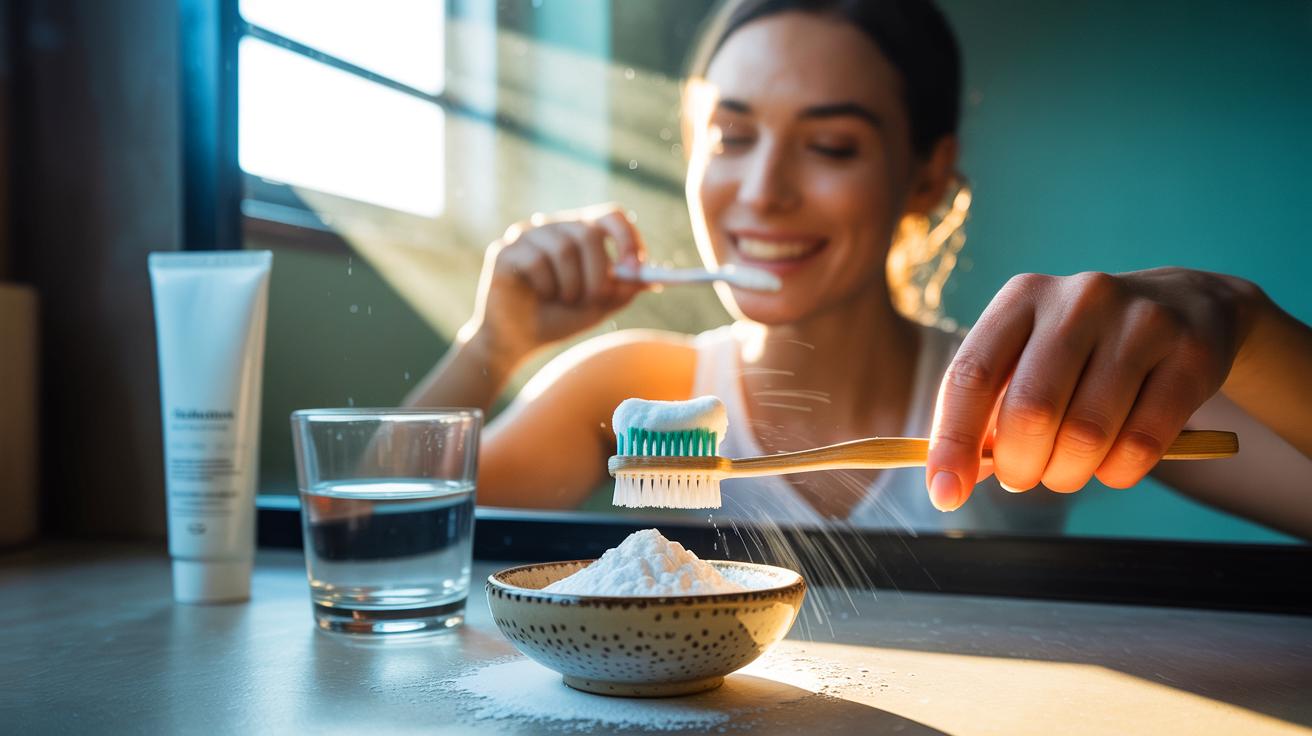
– Night 1 to 3: After your evening floss, wet the brush, tap off excess water, and dip the tips into about 1/4 teaspoon of baking soda. Brush teeth and along the gumline with tiny circles for 60–90 seconds. Keep pressure feather-light. Spit thoroughly, rinse with water, and wait 15–20 minutes. Then brush with your fluoride toothpaste for 30 seconds to replenish minerals and leave a protective film.
– Day 4: Rest day. Use only your regular paste morning and night. Let enamel and gums chill. Hydrate well and avoid dark-staining drinks at night.
– Day 5: Repeat the baking soda step once in the evening, same as Nights 1–3. For many people, that’s enough to reveal a brighter, cleaner-looking surface in just days.
Pro tips: Use a soft brush, never a hard one. Avoid mixing baking soda with lemon juice or vinegar—acids erode enamel. Skip immediate brushing after acidic beverages; wait 30 minutes so softened enamel can reharden. If sensitivity or gum irritation appears, stop and switch back to your normal routine. Those with extensive dental work should consult a dentist first; restorations don’t whiten like natural enamel.
How It Compares to Conventional Toothpaste
Regular toothpaste is designed for daily, lifelong use. It delivers fluoride to strengthen enamel, plus detergents, humectants, and flavors that make brushing feel fresh. Many whitening pastes rely on higher abrasivity or chemical agents to lift stains, and some include baking soda themselves. What plain sodium bicarbonate offers is targeted stain polishing and pH control with unusually gentle abrasiveness—and very low cost. For short, focused whitening bursts, it can outperform non–baking-soda pastes at removing surface discoloration. But it’s not a holistic cavity-defense system, and it won’t change the internal color of teeth the way professional bleaching does.
| Aspect | Baking Soda | Regular Toothpaste |
|---|---|---|
| Primary Benefit | Gentle stain polishing; raises oral pH | Fluoride remineralization; daily plaque control |
| Whitening Speed | Visible in days for surface stains | Gradual; depends on formula |
| Abrasivity (RDA) | Very low for plain powder | Varies; some whitening pastes are higher |
| Best Use | Short, intermittent boosts | Twice-daily, long-term routine |
Bottom line: pair, don’t replace. Use baking soda for quick polish, then rely on your fluoride paste for everyday enamel defense.
Risks, Red Flags, and Dentist-Backed Tips
Used properly, baking soda is gentle. Problems crop up when people scrub too hard, use it too often, or combine it with acids. Never create a DIY “lemon whitening” paste. Acid first softens enamel, then abrasion removes it—exactly the opposite of what you want. Limit polishing to the five-day protocol or once weekly thereafter. Sensitive teeth? Try 45–60 seconds, lighter pressure, and follow with a fluoride or potassium nitrate toothpaste.
Who should talk to a dentist first? Anyone with recession, exposed dentin, recent whitening treatments, braces, veneers, or crowns. Baking soda can brighten natural enamel but won’t lighten ceramics or resin; uneven shades can result. If you notice persistent brown or white spots, bleeding gums, or sharp pain, pause and get a professional exam. Consider a custom plan if you smoke or drink multiple cups of staining beverages daily; habits drive stains more than any paste or powder.
Maintenance is simple. Rinse after dark drinks. Chew sugar-free gum to stimulate saliva. Keep twice-daily fluoride brushing and nightly flossing. For tough, internal discoloration, ask about professional whitening—controlled, measured, safe. Smart strategy beats miracles every time.
Beneath the hype, the science is straightforward: sodium bicarbonate can safely lift surface stains fast, delivering a brighter smile in days when paired with smart technique and your regular fluoride routine. It’s the rare home remedy that stands up to scrutiny and doesn’t drain your wallet. Use it like a pro—briefly, gently, intentionally—and watch small changes add up on the mirror. What’s your next step toward a cleaner, whiter smile: a five-day polish, a coffee cutback, or a dentist-guided plan tailored to your enamel and habits?
Did you like it?4.7/5 (30)
Whoa, the five-day plan is so clear. I followed Nights 1–3 with feather-light brushing and noticed a cleaner sheen by Day 5. Love the reminder to keep fluoride in the mix. Affordable and doable—thank you for laying it out!
My coffee mug is nervouss. If I do the baking soda polish at night, can I still sip espresso in the morning without undoing everything? Any tricks besides rinsing right after my beloved brew?
I’ve got a front veneer and two small composite fillings. If baking soda won’t lighten restorations, how do I avoid a mismatch? Should I spot-polish only natural enamel or just plan a dentist touch-up afterward?
Thanks for the step-by-step! Starting Night 1 today with a soft brush and gentle circles. I’ll wait 20 minutes, then use fluoride paste. Here’s to a small, brighter win this week 🙂
Perfect timing—senior photos are next week! Is it safe for my teen to do 60–90 seconds on Nights 1–3 and Day 5, then once weekly after? Any red flags for braces just removed last month? Thx for teh tips!
Appreciate the RDA and pH breakdown. I always wondered why baking soda felt smooth, not scratchy. Keeping fluoride for remineralization makes total sense. Also grateful for the no lemon juice warning—my enamal thanks you for that callout.
If I get mild sensitivity, would dropping to 45–60 seconds be enough, or should I skip to weekly only? Also, after acidic drinks I wait 30 minutes—can I use a non-acidic mouthrinse during that window, or just water?
Tried this last week: three light polishes, rest day, then Day 5 repeat. Noticeably brighter, zero gum irritation. Soft bristles, no heavy scrubbing, and I kept my fluoride toothpaste routine. Simple, cheap, and definately faster than the strips I used.