In a nutshell
- 🥗 Worms hide in folds and florets; the goal is mechanical removal—use running water and friction to dislodge insects, eggs, and grit rather than chasing sterility.
- 💧 Wash like a pro: clean hands/tools, no dish soap or bleach, then apply running water + friction; swish leafy greens, brush roots, and pry open broccoli/cauliflower florets under the tap.
- 🧂 Use targeted soaks: mild salt (1 tbsp/quart) for greens and brassicas, baking soda (1 tsp/2 cups) for smooth skins, optional light vinegar—always finish with a vigorous rinse.
- 🌀 Dry and store right: spin or pat dry (dry surfaces stay safer), line containers with towels, separate boards for proteins vs. produce, and keep fridges at 40°F (4°C) to reduce cross-contamination.
- ✅ Payoff: cleaner, crisper vegetables with fewer hitchhikers and better flavor thanks to simple, evidence-based steps you can repeat every grocery day.
It’s the unappetizing question lurking in your salad bowl: are hidden worms or tiny insect larvae clinging to those crinkled leaves and florets? Food-safety scientists say vigilance pays off. Not panic. The right wash removes more than soil; it dislodges pests, parasite eggs, and biofilms that shelter microbes. The key is technique, not chemistry. Experts confirm that running water, friction, and smart soaking strategies outperform trendy sprays or harsh cleaners. This guide, built on U.S. public health guidance and produce science, shows exactly how to do it—step by step, with adjustments for leafy greens, bumpy brassicas, and roots. Clean produce. Better flavor. Fewer hitchhikers.
Why Worms Hide in Produce
Vegetables grow in complex ecosystems. That means soil, mulch, and microhabitats where tiny invertebrates thrive. Leafy greens like kale and romaine develop folds and midrib creases that shelter small cabbage worms and aphids. Broccoli and cauliflower trap debris deep in florets. Carrots and radishes pick up clingy particles along fissures in their skin. On organic and homegrown produce, where pesticides are limited, you may simply encounter more natural stowaways. That’s not a failure of farming; it’s biology meeting dinner.
Parasite eggs from animals can land in fields via water, wildlife, or wind. Most are sparse, but they’re tough and sticky. Friction and flowing water break their grip. Texture matters, too. Rough skins and branching stems create nooks that resist a casual rinse. That’s why a thorough, methodical wash dramatically outperforms a quick splash under the tap. The goal isn’t sterility; it’s removal. You’re physically moving contaminants off the surface and down the drain.
Worried about “invisible worms”? Good news: larvae large enough to be a mouthfeel issue are typically visible once dislodged. Small insects float out when you soak and agitate properly. Sound technique beats fear.
Step-by-Step: The Expert-Approved Wash
Start with the basics. Wash your hands for 20 seconds. Clean the sink, colander, and salad spinner. Contaminated tools re-deposit microbes. Do not use dish soap or bleach on produce—those products aren’t approved for foods, can linger in crevices, and may cause irritation. Cold, potable water is your main tool. The science is simple: running water plus friction removes more dirt, pests, and eggs than soaking alone.
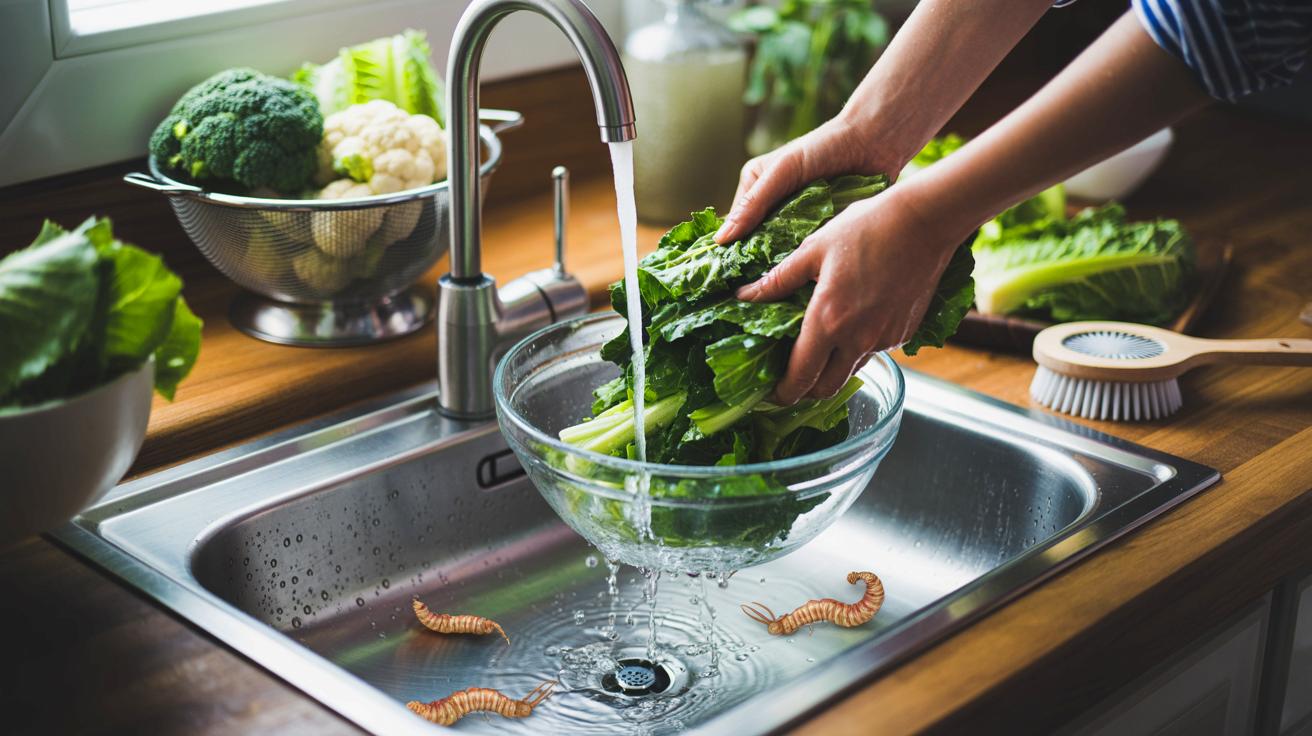
For leafy greens, strip off outer leaves. Submerge the rest in a clean bowl of cold water. Swish aggressively. Dirt sinks; insects float. Lift leaves into a colander—don’t pour the dirty water back over them. Repeat with fresh water until the basin stays clear, typically two rounds. Finish with a salad spinner to expel droplets that shelter bacteria and hold grit. For sturdy items—cucumbers, zucchini, bell peppers—rinse under running water while rubbing for 20–30 seconds, rotating to reach blossom ends. Use a clean vegetable brush on potatoes, carrots, and other roots, then rinse again.
Broccoli and cauliflower need extra attention. Invert heads, stems up, under running water, prying open florets with your fingers as you rinse. A short pre-soak helps, but movement matters more than minutes. Trim away damage where insects often hide. If you see a stubborn hitchhiker, don’t panic—keep rinsing and rubbing until it releases. The point is mechanical removal, not sterilization.
When to Use Salt or Baking Soda Soaks
Saltwater soaks can coax out hidden worms and tiny insects lodged in leafy folds or florets. Use a mild solution—enough to change the water’s density without making your salad taste like the sea. Baking soda helps loosen residues and some pesticide coatings on smooth skins. Both require a final rinse. Think of soaks as a targeted assist, not a replacement for running-water friction.
| Vegetable Type | Method | Ratio | Time | Key Note |
|---|---|---|---|---|
| Leafy greens (kale, romaine) | Cold water swish + optional salt soak | 1 tbsp salt per quart | 5–10 minutes | Lift out, then rinse thoroughly and spin dry |
| Broccoli/cauliflower | Invert rinse + brief salt soak | 1 tbsp salt per quart | 10–15 minutes | Agitate florets; rinse under running water after |
| Root vegetables (carrots, potatoes) | Running water + brush | — | 20–30 seconds | No soak needed; scrub crevices well |
| Tomatoes, peppers, cucumbers | Baking soda rinse + rub | 1 tsp per 2 cups water | 2–3 minutes | Rinse to remove any residue |
If you prefer vinegar, keep it gentle: 1 part white vinegar to 3 parts water for 1–2 minutes, then rinse. Vinegar can dull delicate flavors and isn’t necessary for routine washing, but it helps in stubborn, sandy cases. Always finish with a vigorous fresh-water rinse so your produce tastes like produce, not your cleaning solution.
Drying, Storing, and Cross-Contamination
Drying isn’t cosmetic. Moisture clinging to surfaces can shelter microbes and speed spoilage. For greens, a salad spinner is the fastest path to crisp, clean leaves. No spinner? Pat dry with clean, lint-free towels and replace towels as they dampen. For broccoli and herbs, shake off excess water, then spread on a rack or sheet lined with paper towels. Dry surfaces stay safer longer.
Store washed greens in a breathable container lined with fresh paper towels to absorb stray moisture. Swap liners if they get wet. Keep produce away from raw meat, poultry, and seafood in the fridge to avoid drips and cross-contamination. Use separate cutting boards—one for raw proteins, one for produce. Rotate older items forward so they’re used first. Cold matters: refrigerators should hold at or below 40°F (4°C).
Spot-check before you eat. If you notice damage or hidden insects after washing, trim again and re-rinse that section under running water. Don’t salvage slimy greens or foul-smelling roots; quality and safety travel together. Good habits stacked—clean tools, proper wash, thorough dry, smart storage—deliver safer, better-tasting vegetables.
Washing vegetables the expert way is surprisingly simple: running water, friction, targeted soaks, and thorough drying. No fancy sprays. No harsh chemicals. You’ll remove hidden worms, dislodge grit, and lower microbial risk while preserving flavor and crunch. That’s the promise of sound kitchen science, applied daily. As you look at tonight’s produce, what step will you upgrade first—your rinse, your soak, or the way you dry and store for tomorrow’s lunch?
Did you like it?4.6/5 (21)
Finally a guide that favors technique over magic sprays. The running water plus friction explanation makes total sense, and the salt soak ratios are super clear. My sink and colander are officially on standby tonight.
Quick question: after a 1 tablespoon-per-quart salt soak for kale, do you recommend a second plain-water swish, or straight to the spinner? I’m worried about lingering brininess affecting dressings.
Those “hitchhikers” are about to get evicted. If it doesn’t pay rent, it doesn’t ride my romaine. Swish, lift, spin—like a tiny water park for bugs with a one-way exit.
I followed the broccoli steps and, wow, the pre-soak plus inverted rinse revealed a couple tiny green wigglers. No panic, just rinse and rub. The salad spinner really changed the texture—crisp and clean!
Do prewashed, bagged greens still benefit from the swish-and-spin, or is a quick running rinse enough? Also, does spinning bruise tender butter lettuce leaves, or is that mostly salad myth?
Love the practical bits: towel-lined containers and the 40F fridge reminder. My kids now fight over who gets to pump the salad spinner—free energy! Dinner prep suddenly feels like science class 🙂
Tried this on brocolli and cauliflour tonight—definately more gunk came out than my old quick splash. The tip to pry open florets while rinsing is gold. Any trick for herbs wich bruise easily?
Thank you for emphasizing clean tools first. I’ve started washing the colander and spinner before produce, and the difference in grit is obvious. Pro move: use chopsticks to gently separate tight florets while rinsing.
Is baking soda okay for delicate tomato skins, or better to stick with plain water and friction? I worry about micro-abrasion and flavor carryover if I mis-measure. What’s your preferred timing?
I’ve started composing breakup texts to aphids: “It’s not me, it’s running water plus friction.” Jokes aside, the lift-don’t-pour tip was new to me and instantly reduced grit in my salads.
No spinner yet—any low-tech alternatives you like? I’ve used a clean pillowcase outdoors and spun it like a lasso, but I’m not sure if that’s actually safe or just dramatic.
Great reminder about cross-contamination. I wiped the sink, swapped cutting boards, and kept raw proteins far from produce. The final vigorous rinse made my cucumbers taste brighter, without that weird “tap water” aftertaste.