In a nutshell
- 💧 The core trick: use activated charcoal in a glass or stainless-steel carafe to adsorb chlorine and odors, delivering cleaner, softer, fresher-tasting tap water.
- 🧪 Safety scope: designed for treated, potable water; choose food-grade charcoal sticks (binchotan or bamboo), not BBQ briquettes, and replace if taste or clarity declines.
- 🧼 Setup and storage: boil and dry the stick before use, keep the vessel covered and refrigerated, replace water every 48–72 hours, and re-boil the stick every 2–4 weeks.
- 💰 Costs and footprint: pennies per gallon with far less plastic waste than bottled water or cartridge filters, while noticeably improving flavor and reducing odor.
- 📅 Maintenance for weeks: run a two-carafe rotation, clean weekly with unscented soap or baking soda, avoid citrus/sugars, and reuse spent charcoal as a deodorizer or soil booster.
Plastic bottles promise convenience, yet they leave a trail of waste and a faint chemical aftertaste. There’s a simpler, cleaner path to crisp hydration: a low-tech, high-impact method that keeps tap water tasting spring-fresh for weeks while cutting clutter under your sink. The “trick” is ancient and elegant—activated charcoal in a glass or stainless-steel carafe—supported by a smart storage routine that protects flavor and reduces odor. It’s cheap. It’s quiet. It just works. Use it for treated, potable water, not for questionable sources or floodwater. With a few minutes of setup and a weekly refresh, you can retire the crate of disposable bottles and enjoy consistently clean, cool water at home, at work, or on the road.
The One Trick: Activated Charcoal in a Glass Carafe
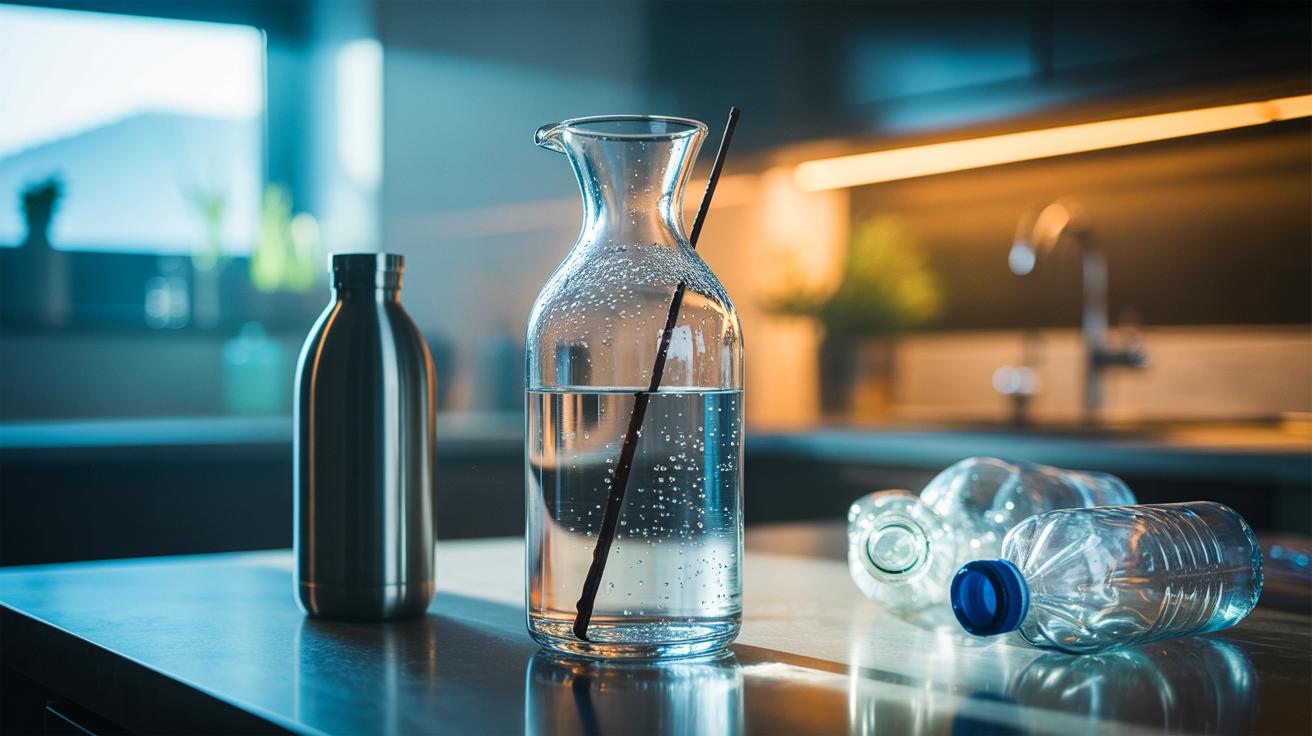
The hero is a stick of activated charcoal, often sold as binchotan (Japanese white charcoal) or sustainably produced bamboo charcoal. Its labyrinth of microscopic pores adsorbs chlorine and off-flavors, tames odors, and can reduce some organic compounds. The result: water that tastes softer and smells clean. Skip barbecue briquettes; they’re full of binders and not food-safe. Choose food-grade, uncoated charcoal sold specifically for water purification.
Here’s the appeal. The stick works passively, without pumps, filters to screw on, or disposable cartridges. Drop it into a glass carafe or stainless steel bottle, let it sit, and in a few hours the water tastes noticeably better. Many sticks last 3–6 months, often longer with gentle care. You can even “recharge” them by boiling for 10 minutes to clear the pores and then drying fully. The method excels at improving taste and reducing chlorine commonly found in municipal water systems. It is not a disinfectant for unsafe water and won’t make contaminated sources safe to drink.
By eliminating the constant churn of single-use plastics, the charcoal-and-carafe combo slashes kitchen clutter and reduces your plastic footprint. The best part? You control the source and storage, which means fewer surprises and fresher flavor day after day.
Step-by-Step Setup and Safe Storage
Start clean. Wash a lidded glass carafe or stainless bottle with unscented soap, rinse thoroughly, and air-dry. Rinse the charcoal stick to remove residue. Boil the stick for 10 minutes, then dry it on a clean rack. Never drop an unwashed, unboiled stick into your water. Fill the vessel with cold tap water and insert the dried stick. Cap or cover to limit airborne particles. Chill the carafe in the fridge to slow microbial growth and keep taste crisp.
Timing matters. After 2–4 hours, flavor improves. Overnight, it’s better. For most people, 24 hours equals peak taste. Replace the water every 48–72 hours, even if it still tastes fine. Don’t “top off” endlessly; empty, rinse, and refill to avoid flavor fatigue and sediment buildup. Every 2–4 weeks, re-boil the stick for 10 minutes to refresh its pores, then dry fully before reuse. Keep a spare stick to rotate while one dries, ensuring you always have a ready carafe.
Best practices: avoid touching the stick with dirty hands; use tongs if you prefer. Keep the vessel covered. Skip citrus slices and sweeteners, which can clog pores and encourage microbial growth. Label the carafe with prep date. If you notice off-odors, cloudy water, or unusual taste, discard the water, clean the vessel thoroughly, and re-boil or replace the stick.
How It Compares: Costs, Taste, and Waste
Good water should be simple and affordable. A single food-grade charcoal stick typically costs less than a few sleeves of bottled water, yet it treats many gallons over months. While exact performance varies by local water chemistry, the flavor gains are immediate: chlorine and musty notes fade, minerality rounds out, and the aftertaste softens. Add in the waste factor—far fewer empties in your bin—and the value compounds quickly.
| Option | Upfront Cost | Ongoing Cost (Per Gallon) | Taste Impact | Plastic Waste |
|---|---|---|---|---|
| Activated Charcoal + Tap | $10–$20 per stick | Low (pennies) | Reduces chlorine/odors; smoother | Minimal |
| Single-Use Bottled Water | None | High (varies by brand) | Consistent but often flat | High |
| Pitcher Filter Cartridges | $20–$50 pitcher | Moderate (cartridges) | Good chlorine reduction | Moderate (cartridges) |
For most city water, charcoal + cold storage delivers excellent taste at the lowest ongoing cost. It’s also quiet sustainability: fewer shipments, fewer plastics, less clutter. If your tap has unusual contaminants (well water or known issues), consult local water reports or use a certified filter specific to that contaminant. Otherwise, the charcoal method wins on simplicity and gentle, reliable flavor polishing.
Make It Last for Weeks: Maintenance That Matters
The secret to week-after-week freshness is consistency. Keep two vessels in rotation: one in the fridge for drinking now, one steeping for tomorrow. Clean the carafe weekly with a bottle brush and unscented soap, then rinse thoroughly. For a deeper clean, dissolve 1 teaspoon of baking soda per quart, swish, let sit 10 minutes, rinse well, and air-dry. If the vessel smells perfumed, repeat until neutral—fragrance residues can taint water.
Refresh the stick by boiling every few weeks. If the water’s flavor weakens or the stick’s surface smooths and loses buoyancy, retire it. Don’t toss it: use spent charcoal as a refrigerator deodorizer, a shoe freshener, or crumble it into plant soil to improve aeration. Keep your setup out of direct sun and away from heat, which can accelerate stale flavors. Cold, dark, clean—follow those three words and your water stays reliably bright. With these simple habits, the system maintains peak taste for months and your plastic footprint shrinks without sacrifice.
Rewriting your water routine doesn’t require a gadget haul or a complicated filter schedule. A charcoal stick, a clean glass carafe, and a few kitchen habits deliver clear, cool, bottle-free hydration that feels like a daily upgrade. You’ll taste the difference the first week, and you’ll see it in the recycling bin by the second. Small ritual, big payoff. Ready to try it and track the savings, the flavor, and the space you reclaim—what will your water routine look like one month from now?
Did you like it?4.4/5 (26)
Tried the binchotan stick last month—tap water suddenly tastes like a cold mountain stream. The fridge tip and two-carafe rotation are genius. Bonus: fewer bottles under my sink. Huge thanks for the clear, step-by-step guide!
Quick question: for a 1-liter glass carafe, what size or weight of activated charcoal stick works best, and how many hours do you let it steep before peak taste?
My water before: Eau de swimming pool. After the charcoal stick: spa day in a carafe. I even named the stick Sir Sips-a-Lot. Any harm if it bumps a lemon slcie?
Love the waste-cutting angle. I’ve stopped buying flats of bottles and my recycling bin finally breathes. Costs are pennies, taste is clean, and maintenance is chill. Small ritual, big payoff indeed—appreicate this!
For treated city water only—got it. If I travel, can I use the same stick in hotel tap water, then re-boil at home? Any storage tips while it’s drying in transit?
When you say re-boil every 2–4 weeks, is that calendar time or usage-based? I rotate two sticks; curious wheter infrequent use extends the interval or if I should stick to the schedule.
I label my carafe with painter’s tape: brew date on the side, replace-by date on the lid. It keeps roommates honest and the water crisp. Also, baking soda rinse works like a charm.
This is the low-tech upgrade my kitchen needed. Setup took 10 minutes, and the chlorine note vanished overnight. Binchotan in stainless, fridge-cold—chef’s kiss. Thanks for the no-plastic nudge 🙂
The reuse tip sold me—crumbling a spent stick into potting mix perked up my basil. Any rules of thumb for how much charcoal per liter of soil to avoid overdoing it?