In a nutshell
- 🍌 Banana peels deliver potassium plus modest phosphorus and calcium, feeding beneficial microbes; they’re not a complete fertilizer, so pair with a nitrogen source for balanced growth.
- 🧪 Practical methods: add to compost, brew diluted peel tea (soak 24–48 hours, dilute 1:4), make dehydrated powder, or trench-bury chopped peels 6–8 inches deep to create a steady, slow-release feed.
- ⚠️ Bust myths and manage risks: peels are not a pesticide; chop and bury to deter pests and odors, keep soak jars clean to avoid mold, and apply to soil (not leaves) in small, regular doses.
- 🌹 Targeted uses: a pinch of peel powder for houseplants, biweekly diluted tea for fruiting vegetables, and chopped peels ring-buried for roses to support stronger blooms, sturdier stems, and steadier fruit set.
- 🌱 Smarter routine: rinse off stickers/residues, balance with other organic matter, water in after application, and track plant response—an easy, eco-friendly way to turn kitchen scraps into healthier soil.
You toss them without thinking. But those spotted banana peels in your kitchen are a quiet goldmine for your garden. Rich in potassium, dotted with phosphorus and calcium, and brimming with compounds that feed soil microbes, peels can help plants bloom harder and recover faster after stress. Gardeners love them for a reason: they’re easy to repurpose, cost nothing, and fit seamlessly into eco-friendly routines. Stop treating peels like trash; start treating them like a slow-release supplement for soil life. Used correctly, they won’t replace a balanced fertilizer, but they can reduce waste and elevate plant health in a way that feels both practical and a little bit magical.
Why Banana Peels Belong in Your Garden
Here’s the short version: banana peels deliver potassium, the nutrient plants use to move water, regulate stomata, and build strong cell walls. That translates into sturdier stems, better drought tolerance, and richer flowering. They also contribute modest phosphorus for root development and calcium to help prevent blossom-end rot in tomatoes and peppers. While peels aren’t a complete fertilizer, they’re a simple way to nudge your soil toward better balance.
Peels shine not only for the minerals they carry but also for what they do underground. As they break down, they feed beneficial microbes, which in turn release nutrients in plant-available forms. This slow choreography supports more resilient soil structure and better moisture retention. Healthy soil isn’t built by one ingredient; it’s built by countless small inputs that add up. Banana peels are one of those small, consistent inputs that move the needle over time.
One caveat: peels are low in nitrogen. If your plants look pale or growth is sluggish, they likely need a nitrogen source alongside your peel regimen. Think quality compost, aged manure, or a balanced organic fertilizer. With that pairing, peels evolve from kitchen castoffs into a nimble tool that complements what you’re already doing to grow healthier plants.
How to Turn Peels Into Plant Food
Your method should match your patience and your plants. If you love set-and-forget solutions, bury peels in a trench between rows or tuck chopped strips two inches below the mulch near shrubs. Prefer speed? Make a “peel tea” by soaking sliced peels in dechlorinated water for 24–48 hours, then dilute 1:4 and water at the base of fruiting plants. For maximum concentration, dehydrate peels at low heat and grind into a powder you can sprinkle sparingly before watering. Chop peels small to speed decomposition and reduce pest interest.
| Method | What It Provides | How to Make | Time to Use | Best For |
|---|---|---|---|---|
| Compost | Balanced nutrients, microbe boost | Mix peels with browns at 1:2 | 4–12 weeks | Beds, shrubs, lawns |
| Peel Tea | Quick potassium pulse | Soak chopped peels 24–48 hrs, dilute | Immediate | Tomatoes, peppers, roses |
| Dehydrated Powder | Slow-release minerals | Dry, grind, store airtight | Immediate | Containers, houseplants |
| Trench Bury | Steady breakdown in soil | Bury 6–8 inches deep | 4–8 weeks | Vegetable rows, perennials |
Keep it clean. Rinse peels to remove stickers and residues. Apply liquids to soil, not leaves, and avoid overdoing it: a little goes far. Pair with a nitrogen source if growth is lagging. With these simple practices, your peel routine becomes consistent, safe, and remarkably effective.
Common Myths, Risks, and How to Avoid Them
Myth one: “Banana peels are a complete fertilizer.” Not quite. They’re excellent for potassium and bring along helpful calcium and magnesium, but they’re not rich in nitrogen. Myth two: “Peel tea is a pesticide.” There’s no solid evidence it controls pests. It’s a nutrient drench, not a bug spray. Use peels for feeding soil, not for disease or insect control.
What about pests and smell? Whole peels tossed on top can attract rodents and flies. Solve it by chopping and burying, or by composting where heat and microbes work quickly. Mold on soaking jars signals an overly long brew or poor hygiene—keep soaks short, use clean containers, and refrigerate if needed for a day. When in doubt, compost it.
Salt and sugar questions come up too. Peels have natural sugars that microbes love; that’s fine when diluted or buried, but sticky surfaces can invite gnats indoors. Apply carefully in containers and wipe spills. As for soil balance, peels won’t “ruin pH,” yet over-application can crowd the root zone and slow oxygen flow. The fix is simple: small doses, regular intervals, and mixing with other organic matter so decomposition remains even and odor-free.
Smart Uses for Houseplants, Vegetables, and Roses
Container gardeners can use dehydrated peel powder sparingly—think a pinch for a six-inch pot, scratched into the top inch of mix and watered in. For leafy houseplants, pair peel inputs with a modest nitrogen feed to keep foliage lush. Skip rubbing leaves with peels; it can leave residue and invite dust. Feed the soil, not the leaf surface.
In the vegetable patch, peels shine during budding and fruiting. Tomatoes, peppers, cucumbers, and squash respond to the potassium bump with steadier fruit set and fewer stress blips in heat. Water with diluted peel tea every two to three weeks, alternating with compost or a balanced organic fertilizer. For root crops, keep applications light; too much potassium can nudge flavor but won’t fix compacted soil or poor watering habits.
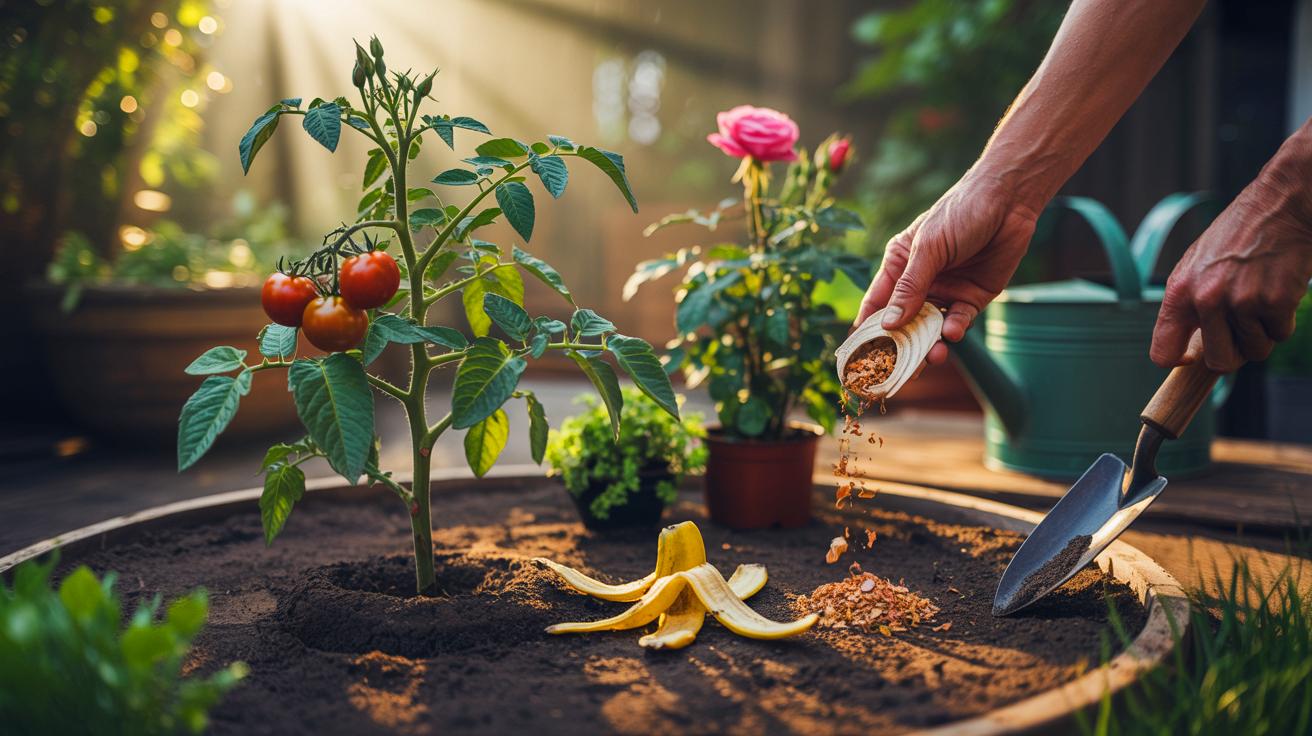
Roses are classic peel lovers. Bury chopped peels in a ring 6–8 inches from the cane, two inches deep, then mulch over the top. Expect more confident blooms and sturdier stems across the season. Shrubs and small fruit trees benefit similarly: trench-bury peels along the drip line and let soil life take it from there. Combined with mulch and consistent watering, the peel routine becomes a quiet engine behind healthier, more resilient plants.
In a season of tight budgets and climate anxiety, turning kitchen scraps into garden strength feels both thrifty and wise. Banana peels won’t replace every input, yet they deliver a reliable lift to flowering, fruiting, and soil vitality with minimal effort. Start small, track how your plants respond, and tune the rhythm to your garden’s needs. What if the best booster was already on your counter, headed for the bin? How will you repurpose your next handful of peels to test what your plants can really do?
Did you like it?4.5/5 (28)
Fantastic guide! I tried trench-burying chopped peels 6-8 inches deep between my tomato rows, and the soil stayed moister and crumbly. Definately adding a nitrogen partner next time. Thanks for the clear, no-hype instructions and realistic timelines.
Quick question for houseplants: when using diluted peel tea, how do you prevent gnats indoors and sticky residues on the soil surface? Also, what’s a safe freqency for watering with it alongside my regular nitrogen feed?
I’m officially the neighborhood banana vigilante now 🙂 Do I need to rinse organic peels too, or is that overkill? Loved the reminder to feed soil life, not try to make a mythical bug spray.
For leafy greens in containers, what nitrogen source pairs best with peel powder—fish emulsion, worm castings, or a balanced granular? Any rough ratio per gallon of mix so I don’t overdo the potassium and starve nitrogren-hungry plants?
Great writeup! The sticker-removal tip was graet and oddly satisfying. I’ve been guilty of skipping that step. Thanks for making composting feel doable on busy weeks.
My roses exploded with blooms after I ring-buried chopped peels and mulched over. Following with biweekly diluted tea kept them sturdy during a heatwave. Big win, minimal effort—appreciate the pest and odor management reminders.
Garden with a curious dog here—do you reccomend any extra steps to keep pups from digging up peels? If I bury 6–8 inches and mulch, will that deter rodents and ordors sufficiently in a small backyard?
Planning to dehydrate peels in batches and grind to powder—how long does it stay potent in an air-tight jar? Would a dessicant packet help, or is cool, dark storage enough for several months without clumping?
If I brew peel tea for 24–48 hours, can I fridge the leftovers? How many days before it goes funky or risks mold? Trying to keep things safe and simple.
I used to toss peels like a banana-snob, but this breakdown truely clicked. Small inputs, steady rhythm, water in, track response—finally learnt a sustainable routine I can actually keep.
Advanced nutrition question: with higher potassium inputs, any risk of nudging magnesium or calcium uptake out of balance in tomatoes? Would you add epsom salts or gypsum, or is that unnecessary if compost covers magnesuim and Ca?
This is a goldmine for tight budgets. Watering in after each application stopped my container mix crusting—waterring was the missing step! Thanks for the practical, no-fuss tips I can repeat every season.
Vermicompost folks: do your worms handle banana peels well, or should I limit to small bits occassionally to avoid fruit flies? I mix browns, but I’d love a rule-of-thumb per pound of bedding.
Pro tip that worked for me: freeze peels, then snip with kitchen scissors before burying. Decomposes faster, zero smell, and my neigbors stopped seeing random peel halves in the beds. Win-win and tidy.
My compost pile just turned into a potassium party 😀 Going to alternate peel tea with balanced fertilizer every two weeks and see if my peppers set more fruit. Thanks for the motivation!