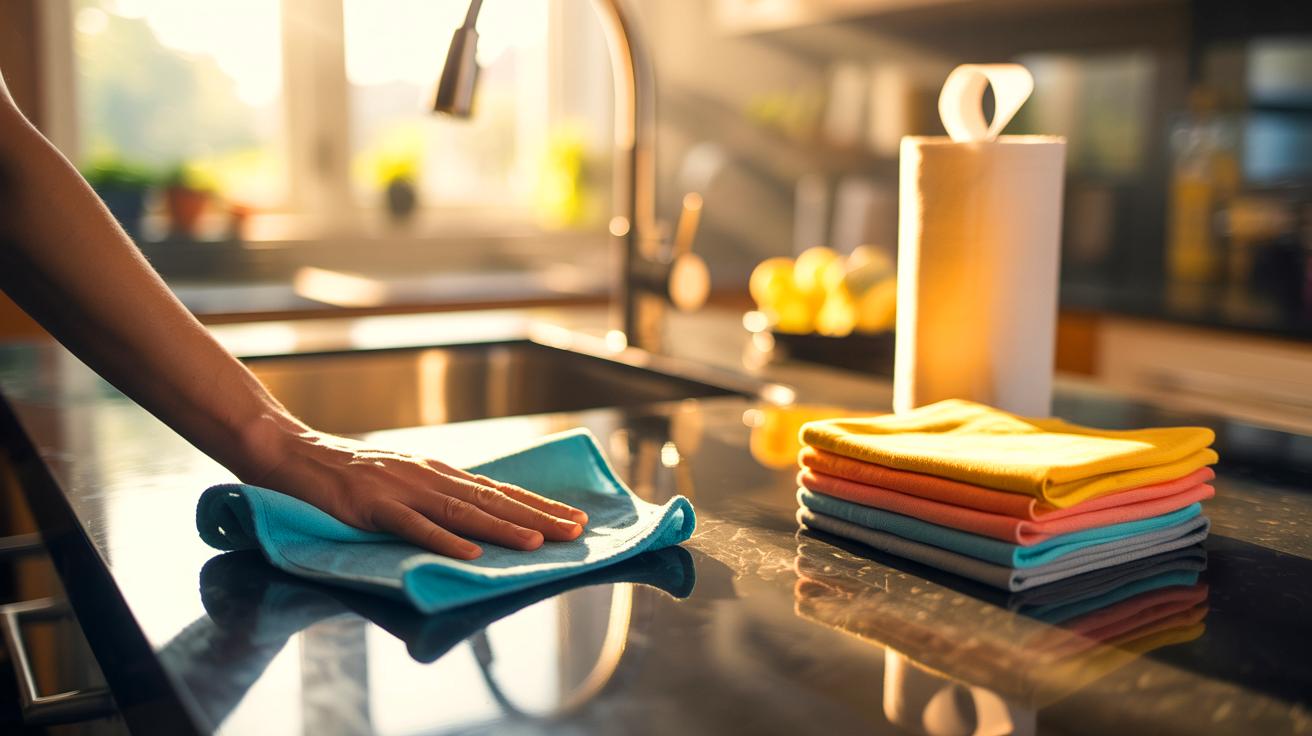
In a nutshell
- 🧽 Microfiber outperforms paper towels with split fibers that grab dust, oil, and microbes, delivering streak-free results with less product.
- 💸 Real cost savings: typical households spend $91–$182/year on paper towels vs $15–$25 for a 12-pack of microfiber, often breaking even in 1–2 months.
- 🧰 Easy setup: buy color-coded cloths, fold into quarters for eight clean sides, use dry for dusting and damp for glass/steel to reduce chemicals.
- 🧼 Smarter care & hygiene: rinse and hang-dry, wash warm/hot, skip fabric softener, and dedicate colors to rooms to prevent cross-contamination.
- 🌎 Better sustainability: reusable hundreds of times, less trash, optional wash-bag to catch microfibers, plus compostable Swedish dishcloths for light tasks.
Paper towels are convenient, familiar, and quietly expensive. They’re also terrible at the job we think they do best: picking up grime without spreading it around. There’s a better option hiding in plain sight. Swap disposable sheets for reusable microfiber cloths and your counters, mirrors, and wallets will feel the difference. One small change in your cleaning routine can cut waste, improve results, and pay for itself within weeks. Think less crumpled paper, more streak-free shine. Think fewer emergency trips to the store, more tools that actually work. This isn’t about perfection. It’s about choosing smarter materials that do more with less, day after day.
Why Microfiber Beats Paper Towels
Paper towels rely on absorption and friction. That’s it. Microfiber brings science to the mess. Each cloth is woven from ultra-fine, split fibers that create millions of tiny hooks. Those hooks grab onto dust, oil, and bacteria, lifting them from surfaces instead of just pushing them around. Used dry, a good microfiber cloth becomes a static-charged dust magnet. Used damp with plain water, it digs into film and residue for a streak-free finish on glass, stainless steel, and stone. In controlled tests, microfiber removes significantly more microbes than paper towels alone.
Performance isn’t the only advantage. Microfiber adapts. One plush cloth for spills, one tight-weave for glass, one scrubby side for stuck-on messes. No lint trails. Far fewer chemicals. A tiny spritz of cleaner goes further because the fibers distribute it evenly instead of soaking it up and wasting it. And while paper towels disintegrate under pressure, microfiber handles real scrubbing without tearing. The result is faster cleaning, fewer passes, and a surface that actually looks—and stays—clean.
How to Build a Smarter Cleaning Kit
Start simple. Buy an 8–12 pack of quality microfiber cloths in different colors so you can color-code by task: blue for glass, yellow for kitchen counters, green for bathroom surfaces, gray for dusting. Add one waffle-weave towel for drying dishes and one plush towel for spills. Color-coding prevents cross-contamination and makes the routine mindless—in a good way. Keep a small spray bottle with water for quick wipe-downs and a second with your preferred multipurpose cleaner. For glass, try water + a drop of dish soap. That’s it.
Use best practices. Fold each cloth into quarters; now you have eight clean sides before it hits the hamper. For glass and mirrors: dampen, wipe, then buff with a dry side. For greasy stovetops: a light cleaner and gentle pressure—let the fibers work. For dusting: go dry, then rinse the cloth when it loads up. Skip fabric softener when laundering; it coats fibers and kills performance. Wash warm, tumble low or air-dry. Dedicated bin under the sink. Fresh cloth, fresh results.
Real Costs: What You’ll Save in a Year
Paper towels feel cheap because the price is sliced into rolls. Add it up. A typical household uses 1–2 rolls a week. At $1.75 per roll, that’s $91–$182 a year—literally thrown away. A 12-pack of durable microfiber runs $15–$25 and lasts one to two years with normal care. Add pennies for water and detergent. Most families break even in the first two months, then pocket savings every week after. And that doesn’t count fewer bottles of glass cleaner or stainless steel spray, because microfiber needs less product to do more work.
| Item | Typical Use | Annual Cost | Notes |
|---|---|---|---|
| Paper Towels | 1–2 rolls/week | $91–$182 | Single use; keeps recurring |
| Microfiber Cloths (12-pack) | Reusable for 1–2 years | $15–$25 | Washed and rotated |
| Detergent/Water | Per laundry cycle | $5–$12 | Shared with other laundry |
Even at the low end, the math favors reusable cloths. And the value compounds: fewer emergency purchases, reduced trash volume, and better results per minute spent cleaning. That’s real money, real time.
Care, Hygiene, and Sustainability Myths
The biggest hesitation is hygiene. Fair. But it’s manageable—and simple. Rinse grimy cloths after use. Hang to dry so bacteria don’t party in damp folds. Wash on warm or hot (140°F/60°C) to sanitize. Skip bleach unless dealing with raw meat; oxygen-based cleaners or a hot wash cycle are usually enough. Used correctly, microfiber can reduce bacterial load more effectively than disposable paper. For kitchens, designate a cloth per day and retire it to the hamper at night. In bathrooms, keep a separate color and rotate frequently.
What about sustainability? Paper towels demand trees, water, energy, and chemical processing—every single roll. Microfiber is synthetic, yes, but it’s reused hundreds of times, dramatically cutting waste. Worried about microfibers in laundry? Use a wash bag or filter to catch shed fibers, and avoid high-heat drying that degrades fabric. If you prefer a plant-based option for dish duty, add a Swedish dishcloth—it’s compostable and replaces dozens of paper rolls for light tasks. The cleanest footprint comes from buying fewer things, using them longer, and maintaining them well. That’s the microfiber advantage in one line.
Small swaps build big habits. Replace paper towels with microfiber, and you’ll clean faster, use fewer chemicals, and spend less—week after week. It’s the rare household upgrade that improves results and reduces waste at the same time. Set up a simple color-coded system, wash and rotate, and watch the roll count drop. Your counters will gleam, your trash will shrink, and your budget will breathe. What room in your home will you transform first with a smarter cloth and a lighter footprint?
Did you like it?4.6/5 (22)
Swapped to microfiber last month and I’m honestly shocked at the difference. The stovetop gunk lifts faster and my glass table stays streak-free longer. Appreciate the color-coding tip—made the routine feel less chaotic and more, dare I say, professional.
Laundry question: do you prefer warm or hot for routine loads to protect the fibers? I bought a Guppyfriend wash bag; does that reduce shedding enough, or should I add a machine filter too for best hygine and longevity?
My paper towel roll looked nervous reading this. It knows its days are numbered. The math sealed it—$15–$25 for cloths beats my constant cart refills. Also, folding into quarters is low-key genius; eight clean sides feels like a magic trick.
Tried water + a drop of dish soap on my mirors and it worked way better than the blue spray. Zero lint, zero drama. Why did no one tell me this sooner? Consider me fully converted to the tight-weave for glass.
The color-coded system is brilliant. Blue for windows, yellow kitchen, green bathroom—our kids actually follow it, which avoids cross-contamination without nagging. We keep a small spray bottle of water on each floor now and cleaning takes half the time.
Any favorite brands or GSM for microfibre that won’t leave haze on stainles steel? I’m okay spending a bit more if they last through weekly scrubs. Also, is a waffle-weave towel better for drying pans than a plush one?
Love that you included Swedish dishcloths. We compost ours after months, and it feels good not tossing rolls of paper. For laundry, I’ll start useing a filter and skip hot-dryer blasts to cut shedding. Tiny tweaks, big enviroment win.
Microfiber = tiny hook ninjas. I used to scrub like a maniac; now I let the cloth do the work. Folding into quarters for eight sides means I’m not just smearing dust around. Simple, oddly satisfying upgrade to my routine.
The cost breakdown is the nudge I needed. I’m definetly tracking paper towel spend this month—pretty sure the reciepts will make me blush. Breaking even in two months and cleaner counters? That’s the kind of adulting I can handle.
Quick care check: skipping fabric softener, got it. Is a splash of white vinegar in the rinse okay, or does that mess with the fibers? Trying to keep odor down without hurting performance. Thanks for the clear, no-fuss guidelines.
We’re mid-kitchen reno and spills are nonstop. The plush cloth has been a life saver for puddles, and the tight-weave keeps our temporary glass table smudge-free. Folding into quarters feels nerdy, but wowzers, it works every single time.
Just ordered a 12-pack after reading this—goodbye paper towels, hello streak-free counters 🙂 Thanks for the practical steps and the math; my budget and windows are already grateful.