In a nutshell
- 🧼 Borax (sodium borate) is making a 2025 comeback, driven by price pressure, demand for simple ingredients, and sustainability-minded shoppers seeking multiuse cleaners.
- 🧪 It boosts wash alkalinity, acts as a mild water softener, deodorizes, and assists with insect control—yet it’s not a disinfectant and shouldn’t be ingested or used on skin.
- 🧺 Practical uses: add ~1/2 cup to laundry for hard water, lightly scrub soap scum, cautiously boost dishwashers, and use covered borax baits for ants—while avoiding dust inhalation and child/pet access.
- 💸 Cost and alternatives: sits between baking soda and oxygen bleach in strength; compare with washing soda for degreasing; store dry, buy plain unscented, and adjust doses for local water hardness.
- 📈 The revival signals a shift toward function over fragrance: fewer products, clearer labels, and budget‑savvy, DIY‑friendly cleaning anchored by basic chemistry.
Once relegated to the back shelf of laundry rooms and grandparents’ cleaning cupboards, borax is suddenly everywhere again. The mineral-based powder—known on labels as sodium borate—is riding a new wave of interest in 2025, thanks to a mash‑up of inflation, ingredient skepticism, and the DIY ethos that’s reshaping household habits. Consumers are looking for multi-taskers that stretch a dollar without stretching the truth. Borax fits the brief. It softens water, supercharges detergents, and deodorizes with quiet efficiency. It’s not new. It’s not flashy. But it’s useful. And in a year obsessed with cutting waste and cutting costs, usefulness is the new luxury.
Why Borax Is Back in 2025
Three forces are driving borax’s revival. First, the price squeeze. Shoppers confronting higher utility and household bills are swapping single-purpose cleaners for a multiuse staple that costs pennies per task. Second, transparency. A generation wary of mystery blends and overpowering fragrances is gravitating toward simple, recognizable ingredients. Borax, a naturally occurring mineral salt, has a clear role: it raises pH and helps lift soils. Third, sustainability pressures. People want fewer plastic bottles, less shipping weight, and products that pull double duty. A cardboard box of borax checks those boxes.
Social media didn’t invent borax, but it did modernize it. Short, practical videos show it clearing rust rings, rescuing dingy towels, and taming odor-prone workout gear. Families with hard water have especially taken notice, since borax softens minerals that otherwise make detergents underperform. There’s also a backlash to “everything spray” culture. Consumers are rediscovering the old formula: a base cleaner, a degreaser, an acid, and a mild abrasive, used intentionally. In that streamlined toolkit, borax earns a permanent spot.
What It Actually Does—and What It Doesn’t
Borax is not magic; it’s chemistry. As sodium tetraborate, it boosts alkalinity in wash water, which helps detergents break down oils and suspend soils. It can neutralize acidic odors, reduce film on glassware when used correctly, and act as a mild water softener by tying up calcium and magnesium ions. On pests, its drying effect and stomach toxicity to insects make it a patient, low-odor tool for ants and roaches when applied in cracks or in carefully prepared baits.
But let’s correct the myths. Borax is not a disinfectant substitute for EPA-registered sanitizers; it doesn’t replace bleach or hydrogen peroxide for killing pathogens. It’s not for skin care, not for “detox” baths, and certainly not for ingestion. Safety varies by jurisdiction: the EU classifies borates as reproductive toxins with certain exposure thresholds, prompting stricter labeling. In the U.S., it’s allowed for household use when handled properly. That means avoiding dust inhalation, wearing gloves if your skin is sensitive, and keeping it out of reach of children and pets. Respect the powder, and it will respect your home.
How to Use Borax Safely at Home
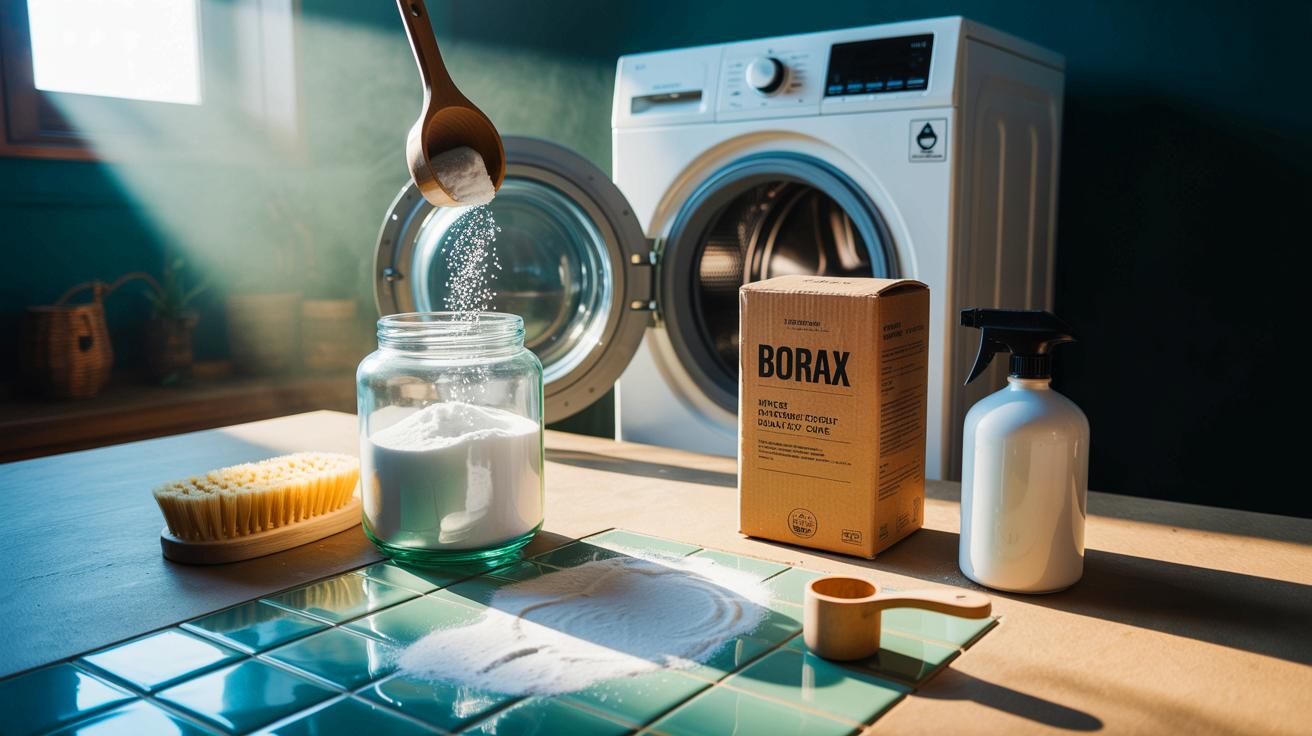
Think measured doses, not heaping scoops. In laundry, add 1/2 cup borax to the drum for a standard load to raise pH and help detergents perform in hard water. For sour towels or gym wear, a warm wash with borax can curb odors without heavy perfume. In bathrooms, sprinkle a little on a damp sponge to lift soap scum, then rinse thoroughly. For dishwashers that leave a cloudy film, 1–2 teaspoons used sparingly as a booster can help—if your manufacturer allows it—though it’s best to run an empty rinse cycle first to test results.
For pests, dust a very thin line into cracks and crevices, or use a bait mixture (a light ratio of borax to sugar water) placed in covered stations away from kids and animals. On carpets, blend a tablespoon into a cup of baking soda, shake lightly, wait 15 minutes, then vacuum. Never ingest borax, never apply it to skin, and never leave it within reach of children or pets. Avoid mixing borax simultaneously with strong acids like vinegar in the same solution; they neutralize each other. Stagger steps instead: alkaline clean first, rinse, then use an acid for mineral deposits if needed.
Costs, Alternatives, and Buying Tips
Shoppers comparing old-school staples will notice that borax sits between baking soda and oxygen bleach on the cleaning spectrum. It’s stronger than the former for laundry boosting and odor control, milder than the latter for stain oxidation. Use that hierarchy to decide what you need—and when a different tool makes more sense. Storage is straightforward: keep borax dry and sealed; humidity makes it clump. Scan for plain, unscented boxes if you want total control over fragrance. For value, larger boxes usually win, but only if you’ll use them within a year.
| Product | Relative Cost | Best For | Not Great For | Safety Notes |
|---|---|---|---|---|
| Borax | Low | Hard water laundry, deodorizing, light scum, insect control | Disinfection, protein stains without detergent | Avoid inhalation/ingestion; keep from kids and pets |
| Baking Soda | Low | Deodorizing, gentle scrubbing, fridge odors | Heavy soils, mineral hardness | Generally mild; avoid large dust exposure |
| Washing Soda | Low–Moderate | Degreasing, boosting detergents, tough laundry | Delicate surfaces, aluminum cookware | More caustic; wear gloves on sensitive skin |
| Oxygen Bleach | Moderate–Higher | Stain oxidation, whitening, mildew-prone fabrics | Oil-heavy grime without a surfactant | Keep dry; follow label for fabrics |
Buying tips for 2025: choose brands with clear ingredient lists, avoid “mystery blends,” and note that borax’s power is in pH and water conditioning, not perfume. If you live with very soft water, you may need less than recipes suggest. Test small, iterate, document what works. Simple chemistry beats complicated marketing every time.
Old doesn’t mean obsolete. Borax’s comeback says as much about consumer priorities as it does about the powder itself: clarity over claims, function over fragrance, thrift over novelty. In a crowded aisle of neon liquids and niche wipes, a humble box built on basic chemistry feels refreshing—and effective. Use it thoughtfully, respect its limits, and it will serve for years. As households recalibrate toward fewer, smarter products, which forgotten workhorse do you think deserves the next revival—and why?
Did you like it?4.4/5 (30)
Love this deep dive! The shift to function over fragrance makes so much sense, and borax ticks every box for my budget. Clear instructions, realistic cautions, and zero fluff—thank you for making old-school chemistry feel fresh again.
Quick question: for an HE washer with soft-ish water, would you start at a quarter cup instead of 1/2, or even less? Trying to boost odor control without overshooting and leaving residue.
Grandma called—she wants her laundry magic back, but I told her 2025 stole it fair and square. Tossing a box in my cart like it’s a vintage comeback tour. Thanks! 🙂
Appreciate the nuance on safety—especially the EU labeling and the reminder it’s not a disinfectant. Clear boundaries help. We’ll keep it away from kids and pets, use gloves for sensitive skin, and avoid dust inhalation. Super helpful, thx.
Could you share your exact ant-bait reciepe and placement tips? Ratio of borax to sugar water, how much in a station, and how often to refresh without attracting curious paws—trying to do this safely and effetively.
That carpet refresher blend is clutch. I mixed a litle borax with baking soda, let it sit 15 minutes, then vacum—smells neutral, not perfumey, and the fibers look less tired already.
This is the declutter energy I needed: one cardboard box replacing three plastic bottles. Love the clarity on pH and water conditioning, and the reminder to buy plain unscented. Function over fragrance feels like progress for the home and enviroment.
I live in a hard-water town and my towels were, um, funky. Added 1/2 cup to the drum and the difference was immediate—less stiffness, way fewer odors. Thx for the laundy dosing guidance!
To avoid neutralizing, is this the right order: borax-based clean, thorough rinse, then vinegar pass for mineral spots? Also, any tips to prevent glassware film when boosting dishwashers—test on an empty cycle frist, then add teaspoons only?