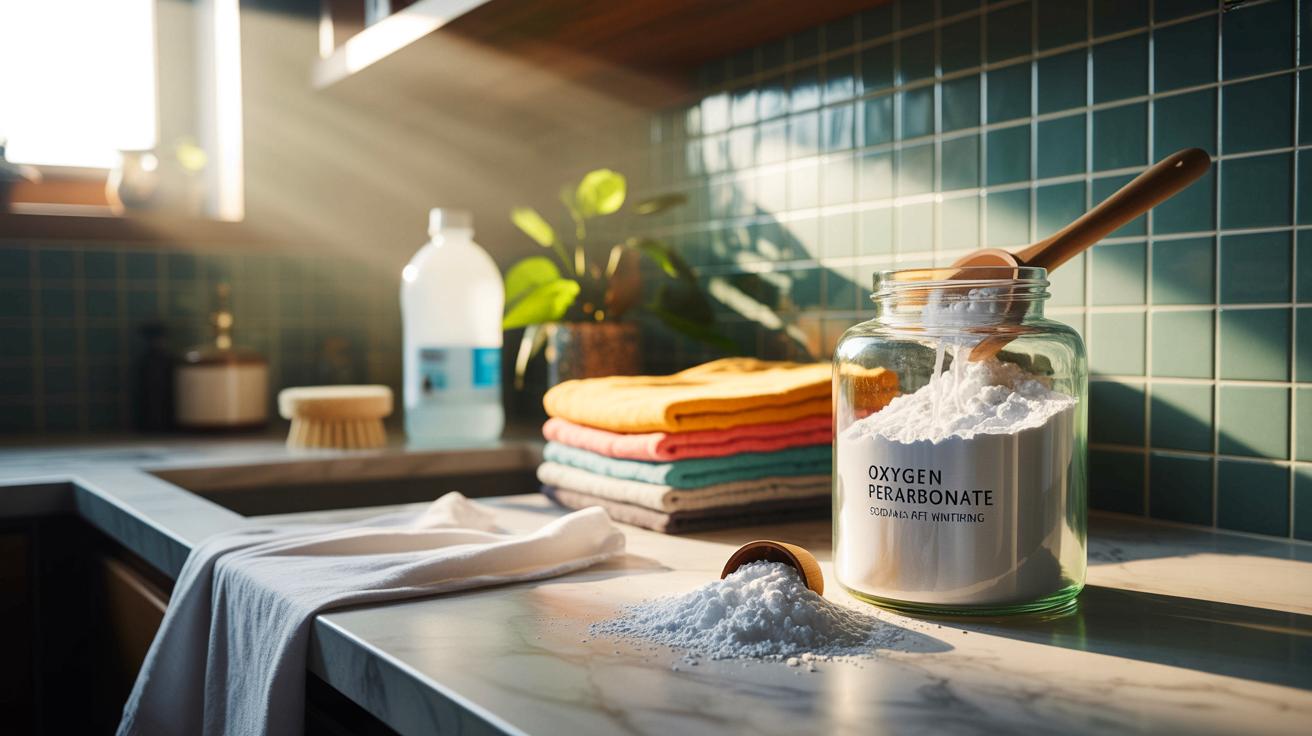
In a nutshell
- 🧼 Oxygen bleach (sodium percarbonate) is a cheap, mineral-based, color-safe cleaner that releases hydrogen peroxide and soda ash, quietly replacing chlorine for everyday cleaning.
- 🌟 Benefits: brightens whites, removes odors, gentler on fibers and dyes, low fumes, and septic-friendly—typically $0.10–$0.25 per laundry load.
- 🧺 Usage: add 1–2 tbsp per load or 2–4 tbsp for pre-soaks; dissolve in warm water for grout, cutting boards, and outdoor grime; store airtight and avoid silk, wool, leather, aluminum, and unfinished wood.
- 🧪 Safety: do not mix with chlorine bleach or acids; it sanitizes but isn’t an EPA-registered hospital-grade disinfectant—reserve chlorine for high-risk, nonporous surface disinfection.
- ⚠️ Limits: less effective on rust, mineral deposits, and dye transfers; best for organic stains—use oxygen bleach for most cleaning and chlorine for targeted disinfection.
In cupboards once owned by chlorine, a different white powder has quietly taken the top shelf. It’s oxygen bleach—the mineral-based workhorse sold under generic labels and big-box brands alike—and it’s winning over households for one simple reason: it works without the harsh drawbacks of traditional bleach. Affordable. Shelf-stable. Color-safe. Homeowners are discovering that a scoop of this stuff can lift set-in stains, knock out odors, and brighten grout, all while sparing delicate fabrics and sensitive lungs. For many everyday jobs, the acrid fumes and splashy risks of chlorine feel unnecessary now. The shift isn’t hype; it’s chemistry, frugality, and a changing idea of “clean.”
What Is Oxygen Bleach, Exactly?
Despite the name, this isn’t liquid. It’s a dry, crystalline powder built on sodium percarbonate, a compound formed by binding hydrogen peroxide to soda ash. When dissolved in water, it breaks into two familiar helpers: hydrogen peroxide for stain-fighting oxidation and sodium carbonate (washing soda) for grease-cutting alkalinity. The soda ash often comes from the mineral trona, mined in places like Wyoming, which is why many users consider it a mineral-based cleaning staple rather than an industrial oddity.
Functionally, oxygen bleach targets organic stains—wine, coffee, grass, sweat—by releasing active oxygen that snips apart colorful molecules. It also deodorizes by oxidizing the smelly compounds that linger in fabrics or grout. Unlike chlorine bleach, it’s generally color-safe on dyed textiles, and it doesn’t produce the same lung-irritating fumes. Used correctly, it’s tough on stains but gentle on most fibers. It breaks down into oxygen, water, and soda ash, which gives it a friendlier environmental profile than hypochlorite solutions. Still, it’s a strong alkali in solution; wear gloves if you have sensitive skin and keep it out of kids’ reach.
Why Households Are Switching From Chlorine Bleach
Two motives dominate: performance on everyday messes and fewer side effects. Oxygen bleach brightens whites without yellowing, revives dingy towels, and lifts odors that survive regular detergents. It won’t corrode stainless as readily or punch pinholes in cotton the way repeated chlorine exposures can. For laundry, it’s also more forgiving: colors usually stay colors. For families washing everything from preschool smocks to performance fabrics, that safety margin matters.
Costs are modest. A bulk tub of sodium percarbonate often lands near $2–$4 per pound. At 1–2 tablespoons per load, that’s roughly $0.10–$0.25 per wash—competitive with name-brand whiteners and often cheaper than splash-resistant jugs of bleach. Many septic owners prefer it because it doesn’t introduce chlorinated byproducts. The trade-off? Disinfection strength. Chlorine is king for rapid, high-level kill on hard, nonporous surfaces, while oxygen bleach leans “sanitizing” in typical home dilutions. It’s an everyday cleaner first, a sporadic sanitizer second. Never mix oxygen bleach with chlorine bleach or acids; keep your chemistry simple and separate.
| Feature | Chlorine Bleach (Sodium Hypochlorite) | Oxygen Bleach (Sodium Percarbonate) |
|---|---|---|
| Primary Action | Disinfects fast; whitens by chlorination | Oxidizes stains; deodorizes; color-safe whitening |
| Fumes/Odor | Pungent chlorine fumes | Low odor |
| Fabric Impact | Can weaken fibers, fade colors | Gentler on fibers and dyes |
| Best Use | High-risk disinfection, mold on nonporous surfaces | Laundry boosting, stain removal, grout brightening |
| Typical Cost per Load | $0.05–$0.20 | $0.10–$0.25 |
How to Use It: Laundry, Kitchens, and Beyond
Think of oxygen bleach as a power-up for detergent. For a standard laundry load, dissolve 1 tablespoon in warm water and add to the drum or dispenser; go to 2 tablespoons for heavy soil. Pre-soaks are where the powder shines: mix 2–4 tablespoons in a gallon of warm water, submerge fabrics for 1–6 hours, then wash as usual. Heat helps activation, but don’t boil; warm-to-hot is ideal. Always test colorfastness on an inside seam, especially with vintage garments.
In kitchens and baths, mix 1 tablespoon per quart of warm water and apply to stained grout, cutting boards, or plastic bins. Let it sit 10–15 minutes, scrub lightly, and rinse well. On patio furniture and mildew-stained siding, a stronger solution (up to 1/2 cup per gallon) lifts grime without the nose-sting of chlorine. Carpets? Spot-test first; use a weak solution, blot, and rinse. Avoid silk, wool, leather, aluminum, and unfinished wood—its alkalinity can etch or swell sensitive materials. Store the powder airtight; humidity shortens its punch. One rule saves headaches: dissolve first, then apply.
What It Can’t Do—and When Bleach Still Wins
Oxygen bleach is not a cure-all. If you need rapid, EPA-registered disinfection on hard surfaces after raw chicken spills or during a contagious illness, chlorine bleach or another approved disinfectant remains the professional choice. Oxygen bleach sanitizes laundry and can reduce microbial load, but it isn’t typically labeled for hospital-grade kill claims at home-use dilutions. In high-risk scenarios, prioritize tested disinfectants and follow label contact times.
It also struggles with some inorganic stains—rust, hard-water deposits, old dye transfers—where specialized removers do better. Deep mold rooted in porous drywall or framing requires remediation, not a cleaning pass. And pool care? Stick with chlorinated systems. The smarter framing is division of labor: use oxygen bleach for 80–90% of routine cleaning and whitening, reserve chlorine for targeted disinfection or severe mildew on nonporous surfaces. That balance reduces exposure to harsh fumes without sacrificing safety where it counts, and it keeps budgets in line.
Call it a quiet revolution: a cheap, mineral-based powder swapping into roles long dominated by chlorine, restoring whites, reviving towels, and brightening grout with fewer headaches and fewer ruined shirts. Households aren’t abandoning bleach entirely; they’re using it smarter, less often, and with purpose. The center of gravity has moved toward products that clean powerfully without scaring your eyes or lungs. The result is a home that feels fresher, not just harsher. Where would oxygen bleach fit into your routine, and which stubborn mess would you test it on first?
Did you like it?4.3/5 (21)
Quick question: for dingy bathroom grout, is the 1 tbsp per quart solution enough, or do you reccomend going stronger and letting it sit longer? I’m also curious if colored towels stay safe at 2 tbsp per load in warm water.
Loved this breakdown—thx! The cost-per-load math and septic-friendly angle make it an easy swap in our house. Fewer fumes, fewer ruined shirts, and my laundry room doesn’t smell like a pool anymore.
Finally, a white powder I can brag about keeping on the top shelf without raising eyebrows. I tossed a scoop into my stinky gym bag soak and it de-funked like a champ. Wallet’s happier too.
Tried it on grass-stained soccer socks and the before/after was wild. Colors stayed bright, whites perked up, and no crunchy fabric feel. This is going into the weekly routine for sure.
Appreciate the reminder not to mix with chlorine. I keep them on seperate shelves now. My flow: dissolve a tablespoon in warm water, add to the drum, then a longer wash—zero bleachy splashes on my tees.
My nose says thank you 🙂 Switched from hypochlorite for most loads, and the laundry room air is so much calmer. The color-safe angle means fewer oops moments, and towels actually feel softer after a warm pre-soak.
Question on cookware: you note to avoid aluminum—got it. What’s the safest way to deodorize old cutting boards without swelling the wood? Would a brief wipe-down with a weak solution be alright, or better to stick to plastic?
Small tip I wish I’d known sooner: dissolve first! I used to sprinkle the powder in dry and got clumpy bits on a sweater—oops. Now I stirr it in warm water and the results are way more even.
As someone who quilts, I appreciate the advice to test colorfastness on seams. Did a gentle overnight soak on a vintage block, then normal wash, and the reds didn’t bleed. Feels much safer than the old splash-and-pray routine.
Great explainer. I labeled a jar “Percarbonate—keep dry” and moved it to airtight stoarge with silica packets; the punch lasts longer. Warm water activation plus a 15-minute dwell has revived our dingy bath mats and the cutting board.