In a nutshell
- 🍅 Store at room temperature (68–72°F) in a single layer, away from sun, and place tomatoes stem-side down to protect the vulnerable stem scar and retain moisture.
- ❄️ Cold causes chilling injury below ~55°F, muting aroma and making texture mealy; use the fridge only for fully ripe tomatoes for 2–3 days, then return to room temp for 30–60 minutes before eating.
- 🔄 Manage ripeness: keep ripe and unripe fruit separate to control ethylene exposure, and never refrigerate unripe tomatoes; rotate batches so cold pauses ripening rather than replacing it.
- ✂️ For cut tomatoes, refrigerate in a sealed container with a paper towel for 24–48 hours, bring to room temp, then season; cooked dishes (sauces, soups) avoid the fridge penalty.
- 🛒 Buy smarter: choose heavy, fragrant fruit; avoid refrigeration scars; lean on cherry/grape off-season and Roma for cooking, and purchase with intent to match how you’ll store and use them.
Admit it: you’ve tossed tomatoes into the fridge, figuring cold equals fresh. It feels intuitive, especially in a sweltering kitchen. Yet that habit quietly sabotages their texture and taste. Tomatoes are living fruit, breathing and ripening, guided by delicate chemistry that cold shuts down. The result is mealy flesh and muted flavor. The fix isn’t fussy or expensive. It’s understanding how tomatoes ripen, when to pause that process, and where to place them day by day. With a few small shifts—counter over crisper, stem-side down, smart timing—you’ll protect summer sweetness and coax better flavor from every slice.
Why the Fridge Mutes Tomato Flavor
Tomatoes evolved for warmth. When temperatures drop below about 55°F, their aroma-making machinery slows or stops. Scientists call this chilling injury. The cold disrupts enzymes that synthesize the compounds we taste as “tomato,” especially the floral, green, and savory notes that make ripe fruit sing. Inside the cells, membranes stiffen. Water escapes from tiny compartments. Texture goes cottony. Place a ripe tomato in the refrigerator too soon and you trade snap and juice for grainy mush.
Flavor isn’t just one chemical; it’s a score of volatile compounds working in harmony. Cold mutes that orchestra. Even after you bring a chilled tomato back to room temperature, some volatiles don’t recover. You might sense sweetness, but the high notes vanish. The effect is stronger in large slicing tomatoes and delicate heirlooms, which have thinner walls and more complex aromatics. Cherry tomatoes, with thicker skins and higher sugar, are slightly more forgiving—but only slightly.
Then there’s the stem scar, the small circle where the vine attached. It’s a gateway for moisture loss and microbes. In the fridge, that vulnerable spot can darken or pucker. Cold storage doesn’t stop decay; it often reshapes it into a blander, soggier problem. If you crave that sun-warmed perfume in a BLT, your best move is to keep ripe tomatoes out of the cold until you absolutely must pause the clock.
The Right Way: Countertop, Stem-Side Down, and Timing
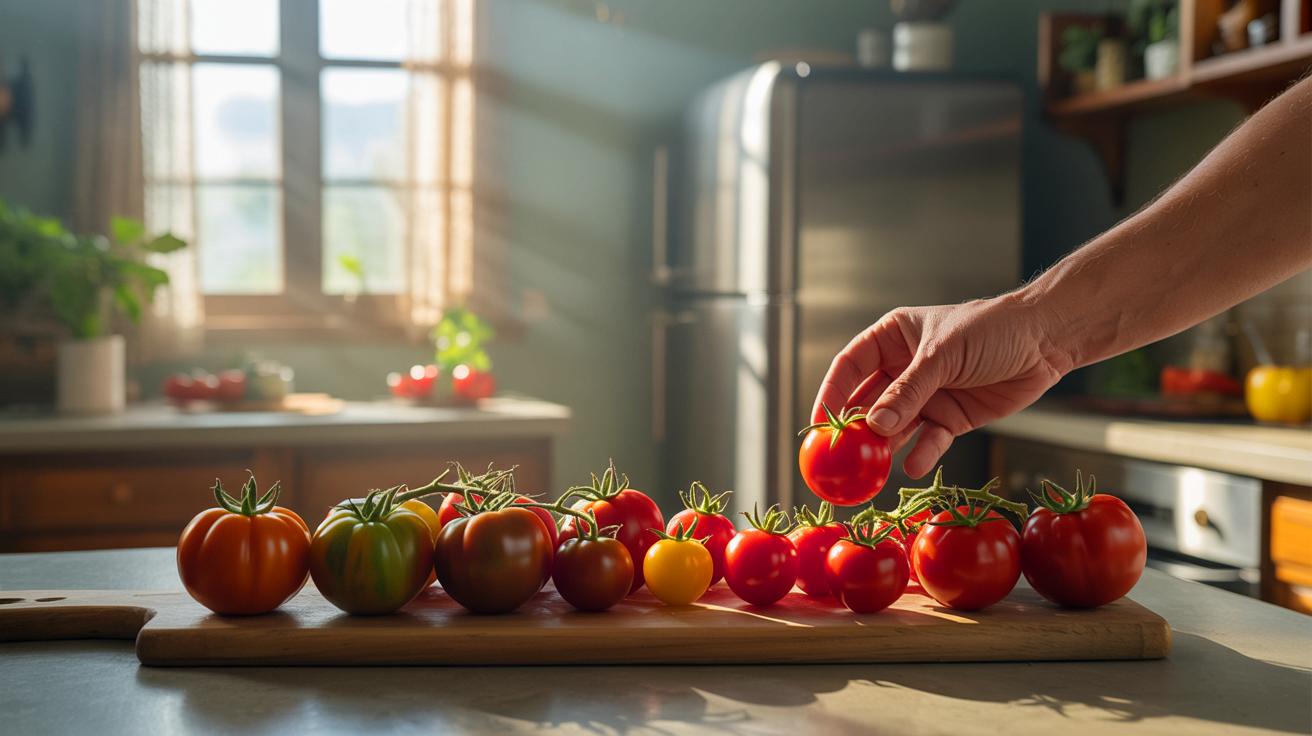
Start at the counter. Keep tomatoes at room temperature, ideally 68–72°F, with decent airflow and away from direct sunlight. Sun feels romantic. It’s not your friend here. Heat on one side speeds uneven ripening and can toughen the skin. Instead, arrange them in a single layer, not piled, to avoid bruising. Set them stem-side down. That flips the stem scar—the leakiest, most fragile spot—onto a stable surface, reducing moisture loss and blocking microbial hitchhikers.
Ripeness management is your secret weapon. Keep firmer, paler tomatoes apart from fully ripe ones. Tomatoes emit ethylene, a natural ripening gas. Grouping ripe with unripe accelerates the laggards, which is useful if you plan salsa night, risky if you don’t. If a fruit is nearly there—fragrant, slightly tender—give it a day on the counter to finish. Never refrigerate unripe tomatoes; cold halts the chemistry that builds flavor in the first place.
Want a quick reference? Use this guide.
| Storage Method | Best For | Temperature | Typical Duration |
|---|---|---|---|
| Counter, stem-side down | Unripe to ripe fruit | 68–72°F | 2–5 days to ripen |
| Shaded, cool room | Slowing near-ripe fruit | 55–65°F | 3–7 days |
| Refrigerator crisper | Fully ripe, short pause | 35–40°F | 2–3 days |
When the Fridge Is Okay: Using Cold to Pause Ripening
There is a place for the fridge. Use it like a time-out, not a home. Once tomatoes are fully ripe—fragrant, deeply colored, yielding slightly to a gentle press—cold can buy you a bit of breathing room. Slip them into the crisper in a shallow container, loosely covered to prevent condensation. Always let chilled tomatoes return to room temperature before you eat them. Thirty to sixty minutes restores juiciness and wakes up some aromatics.
Sliced or chopped tomatoes are different. Once cut, you’re fighting water loss and microbial growth. Store cut pieces in a sealed container lined with a paper towel, in the refrigerator, for up to 24–48 hours. Bring to room temp before serving, then season. A pinch of salt and a drizzle of olive oil help bridge any flavor gaps caused by chilling. For cooked dishes—sauces, soups, shakshuka—the fridge penalty vanishes because heat rebuilds aroma and texture in other ways.
Batch strategy matters, especially after a market haul. Separate today’s tomatoes from tomorrow’s. Keep today’s on the counter. Move tomorrow’s ripe fruit to the fridge for a short stint. Rotate them back out in time for dinner. Cold should pause ripening, not replace it. That rhythm protects peak flavor while reducing waste, a practical compromise for busy kitchens.
Buying Smarter: Variety, Ripeness, and Season
Storage starts at the store. Choose tomatoes that feel heavy for their size and smell like tomatoes, especially at the stem end. Avoid refrigeration scars—dull, matte skin; waxy feel; chilled shoulders. In season, local field-grown fruit delivers superior flavor and resilience. Off-season, lean on cherry and grape tomatoes, which hold sugars better and withstand brief chilling. For sauces, plum varieties like Roma have meatier walls and less juice, ideal for cooking and forgiving in storage.
Color signals, but context rules. A green-shouldered heirloom can be ripe while a fully red supermarket tomato may still be bland. Test with your fingers and nose. Gentle give? Good. Strong aroma? Better. If you’ll eat them within two days, prioritize ripe or near-ripe fruit. Planning a weekend feast? Choose firmer tomatoes, then ripen them at home on the counter, stem-side down, in a single layer. Control the ripeness curve and you control the flavor.
Think ahead to uses. Sandwiches want large slicers with balanced acidity. Salads love sweet cherries. Roasting forgives imperfections and concentrates taste, making “ugly” tomatoes a bargain. Buying with intent minimizes last-minute fridge triage. And if you overbuy, turn surplus into a quick pan sauce with garlic and basil; the stove rewards even slightly chilled fruit, turning potential waste into dinner.
Tomatoes aren’t demanding; they’re particular. Warmth builds flavor. Gentle handling protects texture. Short, strategic chilling preserves a peak you can’t reach any other way on a hectic weeknight. When you respect how this fruit breathes, ripens, and softens, you spend less, waste less, and taste more. The smartest kitchen move is simple: counter first, fridge only when fully ripe, and always back to room temp before serving. What small change will you make this week to keep your tomatoes tasting like summer, slice after slice?
Did you like it?4.3/5 (26)
Mind blown. I started storing tomatos stem-side down on the counter last week and the difference is wild—no more leaky scars or sad, mealy slices. Letting ripe ones warm up after the fridge actually brought back some aroma. Thanks for the simple, practical steps.
Quick Q: does the 30–60 minute warm-up window differ for cherry tomatoes versus big heirlooms? I’m trying to plan salads and hate serving them dull. Also, is 55°F the same cut-off for all varietys, or are some a bit more forgiving?
So my crisper drawer has been a tomato witness protection program—new identity, zero flavor. I’ll parole the ripe ones for only 2–3 days and then back to room temp. Any tricks to stop roommates from piling fruit on top and bruising them?
I set up a single-layer tray in a cool, shaded spot (around 68–72°F) and flipped everything stem-side down. Keeping ripe and unripe seperate for ethylene control already helps. If I need to speed ripening, is a paper bag okay, or does that trap too much heat?
Great guide! My tiny apartment is sun-blasted all afternoon—no cool counter space. Would a ventilated shelf inside a cabinet work, or is that too stale? I can rotate batches to the fridge only when fully ripe, then warm before serving. Thanks 🙂
Loved the buying tips—grape/cherry off-season and Roma for sauce. I’ll stop panic-refridgerating and just cook extras into a quick pan sauce with garlic and basil. Heat really does dodge that “fridge penalty.” This is definatly going into my weekly prep.
For cut tomatoes: is glass better than plastic for the sealed container, or no big difference? I line with a paper towel, but sometimes they taste watery after 24 hours. Salt before storing, or only after fridgeing and warming?
I used to chill unripe tomatos and wondered why they tasted like cotton. Counter first, fridge only for fully ripe, then back to room temp has totally fixed my BLTs. The stem-scar tip is genius. I’ll definitley be rotating market hauls smarter.